


 Cart
Cart
 sales@molnova.com



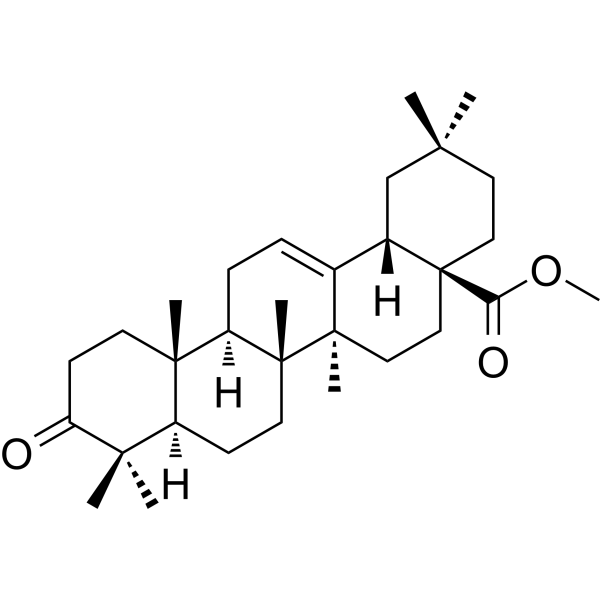
Methyl oleanonate
CAS No. 1721-58-0
Methyl oleanonate( 3-Oxoolean-12-en-28-oic acid methyl ester | Methyl oleanonate )
Catalog No. M29448 CAS No. 1721-58-0
3-Oxoolean-12-en-28-oic acid methyl ester is a triterpenoid PPARγ agonist isolated from Pistacia with anticancer properties.
Purity : >98% (HPLC)
 COA
Datasheet
HNMR
HPLC
MSDS
Handing Instructions
COA
Datasheet
HNMR
HPLC
MSDS
Handing Instructions
| Size | Price / USD | Stock | Quantity |
| 5MG | 202 | In Stock |


|
| 10MG | 306 | In Stock |
|
| 25MG | 511 | In Stock |
|
| 50MG | 714 | In Stock |
|
| 100MG | Get Quote | In Stock |
|
| 200MG | Get Quote | In Stock |
|
| 500MG | Get Quote | In Stock |
|
| 1G | Get Quote | In Stock |
|
Biological Information
-
Product NameMethyl oleanonate
-
NoteResearch use only, not for human use.
-
Brief Description3-Oxoolean-12-en-28-oic acid methyl ester is a triterpenoid PPARγ agonist isolated from Pistacia with anticancer properties.
-
Description3-Oxoolean-12-en-28-oic acid methyl ester is a triterpenoid PPARγ agonist isolated from Pistacia with anticancer properties.
-
In Vitro——
-
In Vivo——
-
Synonyms3-Oxoolean-12-en-28-oic acid methyl ester | Methyl oleanonate
-
PathwayMetabolic Enzyme/Protease
-
TargetPPAR
-
RecptorPPAR
-
Research Area——
-
Indication——
Chemical Information
-
CAS Number1721-58-0
-
Formula Weight468.71
-
Molecular FormulaC31H48O3
-
Purity>98% (HPLC)
-
SolubilityIn Vitro:?DMSO : 2.5 mg/mL (5.33 mM)
-
SMILESCC1(C)C(CC[C@]2(C)[C@@]3([H])CC=C4[C@]5([H])CC(C)(C)CC[C@@](C(OC)=O)5CC[C@](C)4[C@@](C)3CC[C@@]12[H])=O
-
Chemical Name——
Shipping & Storage Information
-
Storage(-20℃)
-
ShippingWith Ice Pack
-
Stability≥ 2 years
Reference
molnova catalog



related products
-
Furegrelate sodium
Furegelate sodium is a selective thromboxane synthase inhibitor with oral activity.
-
GQ-16
GQ-16 is a partial agonist of PPARγ with a Ki of 160 nM. GQ-16 reduces adipogenic actions and promotes insulin Sensitization without weight gain.
-
IVA-337
IVA-337 (Lanifibranor, IVA337)) is a potent, pan PPAR agonist with EC50 of 0.92 uM, 0.53 uM and 0.18 uM for human PPARα, PPARδ and PPARγ respectively.
