


 Cart
Cart
 sales@molnova.com



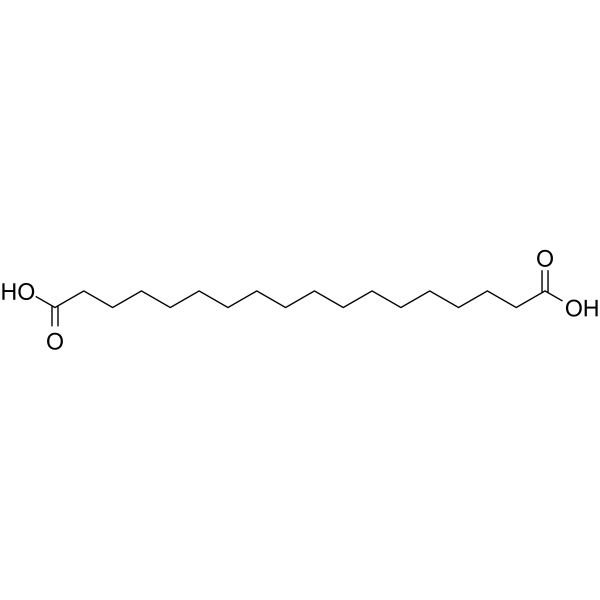
Octadecanedioic acid
CAS No. 871-70-5
Octadecanedioic acid( —— )
Catalog No. M26346 CAS No. 871-70-5
Octadecanedioic acid is an endogenous metabolite, is a long-chain dicarboxylic acid.
Purity : >98% (HPLC)
 COA
Datasheet
HNMR
HPLC
MSDS
Handing Instructions
COA
Datasheet
HNMR
HPLC
MSDS
Handing Instructions
| Size | Price / USD | Stock | Quantity |
| 100MG | Get Quote | In Stock |


|
| 200MG | Get Quote | In Stock |
|
| 500MG | 31 | In Stock |
|
| 1G | 43 | In Stock |
|
Biological Information
-
Product NameOctadecanedioic acid
-
NoteResearch use only, not for human use.
-
Brief DescriptionOctadecanedioic acid is an endogenous metabolite, is a long-chain dicarboxylic acid.
-
DescriptionOctadecanedioic acid is an endogenous metabolite, is a long-chain dicarboxylic acid.
-
In Vitro——
-
In Vivo——
-
Synonyms——
-
PathwayProteasome/Ubiquitin
-
TargetEndogenous Metabolite
-
RecptorPHGDH
-
Research Area——
-
Indication——
Chemical Information
-
CAS Number871-70-5
-
Formula Weight314.466
-
Molecular FormulaC18H34O4
-
Purity>98% (HPLC)
-
SolubilityIn Vitro:?DMSO : 100 mg/mL (318.01 mM)
-
SMILESOC(=O)CCCCCCCCCCCCCCCCC(O)=O
-
Chemical Name——
Shipping & Storage Information
-
Storage(-20℃)
-
ShippingWith Ice Pack
-
Stability≥ 2 years
Reference
1.Rohde JM, et al. Discovery and optimization of piperazine-1-thiourea-based human phosphoglycerate dehydrogenase inhibitors. Bioorg Med Chem. 2018 May 1;26(8):1727-1739.
molnova catalog



related products
-
Heptacosanoic acid
Heptacosanoic acid is a compound derived from Rhodosporidium kratochvilovae HIMPA1, a novel oil-bearing yeast isolated from Himalayan permafrost.
-
3-Hydroxyglutaric ac...
3-Hydroxyglutaric acid is one of several metabolites produced when insufficient levels of GCDH are available. It is used as a biomarker of GCDH deficiency.
-
Ercalcidiol
Ercalcidiol is a metabolite of vitamin D2 and can be used in monitoring vitamin D therapy.
