


 Cart
Cart
 sales@molnova.com



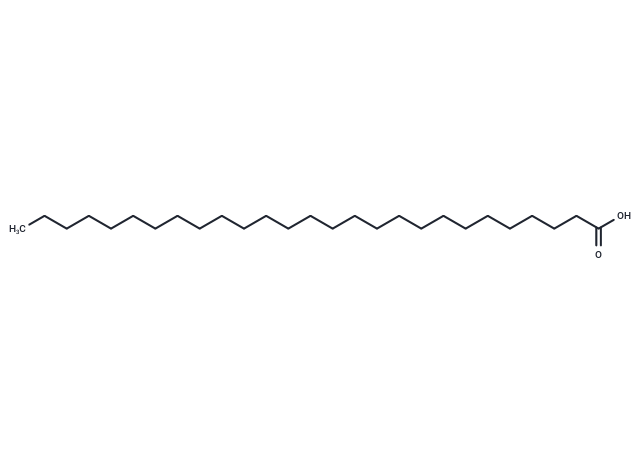
Heptacosanoic acid
CAS No. 7138-40-1
Heptacosanoic acid( —— )
Catalog No. M36844 CAS No. 7138-40-1
Heptacosanoic acid is a compound derived from Rhodosporidium kratochvilovae HIMPA1, a novel oil-bearing yeast isolated from Himalayan permafrost.
Purity : >98% (HPLC)
 COA
Datasheet
HNMR
HPLC
MSDS
Handing Instructions
COA
Datasheet
HNMR
HPLC
MSDS
Handing Instructions
| Size | Price / USD | Stock | Quantity |
| 100MG | 33 | In Stock |


|
| 200MG | Get Quote | In Stock |
|
| 500MG | Get Quote | In Stock |
|
| 1G | Get Quote | In Stock |
|
Biological Information
-
Product NameHeptacosanoic acid
-
NoteResearch use only, not for human use.
-
Brief DescriptionHeptacosanoic acid is a compound derived from Rhodosporidium kratochvilovae HIMPA1, a novel oil-bearing yeast isolated from Himalayan permafrost.
-
DescriptionHeptacosanoic Acid is a biochemical reagent that can be used as a biological material or organic compound for life science related research.
-
In Vitro——
-
In Vivo——
-
Synonyms——
-
PathwayProteasome/Ubiquitin
-
TargetEndogenous Metabolite
-
RecptorEndogenous Metabolite
-
Research Area——
-
Indication——
Chemical Information
-
CAS Number7138-40-1
-
Formula Weight410.72
-
Molecular FormulaC27H54O2
-
Purity>98% (HPLC)
-
Solubility——
-
SMILESCCCCCCCCCCCCCCCCCCCCCCCCCCC(O)=O
-
Chemical Name——
Shipping & Storage Information
-
Storage(-20℃)
-
ShippingWith Ice Pack
-
Stability≥ 2 years
Reference
molnova catalog



related products
-
N-Methyl-DL-glutamic...
2-(Methylamino)pentanedioic acid (N-Methyl-DL-glutamic acid) is an endogenous metabolite that inhibits Glutaminase, adds freshness to edible products, and can be used in tuberculosis research.
-
H-Asn(glcnac-beta-D)...
H-Asn(glcnac-beta-D)-OH can be isolated from egg protein and animal tissues and can be hydrolyzed by glycosylasparaginase.
-
2,4-Dimethylacetophe...
2',4'-Dimethylacetophenone is a chemical that can be used in biological research. The compound can be used in gas chromatography to detect aldosterone aroma in tobacco compounds and can be used to protect food products.
