


 Cart
Cart
 sales@molnova.com



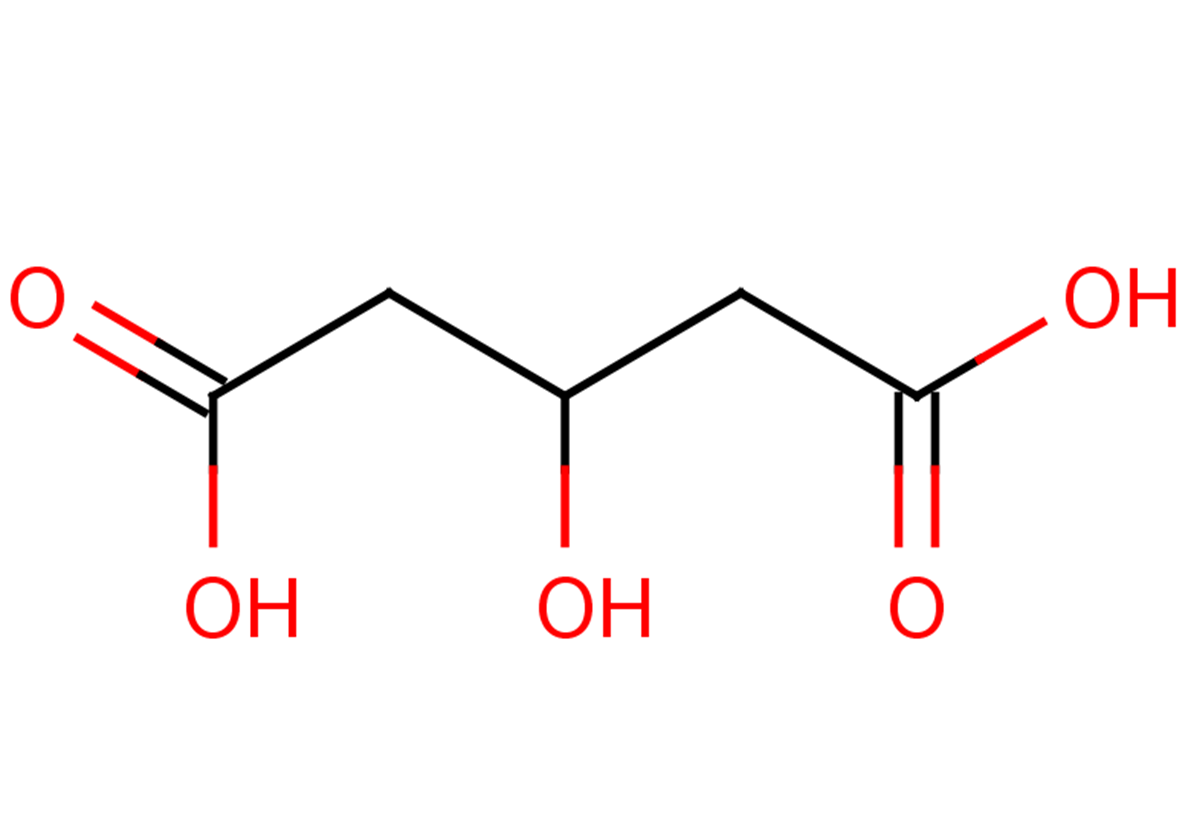
3-Hydroxyglutaric acid
CAS No. 638-18-6
3-Hydroxyglutaric acid( —— )
Catalog No. M24650 CAS No. 638-18-6
3-Hydroxyglutaric acid is one of several metabolites produced when insufficient levels of GCDH are available. It is used as a biomarker of GCDH deficiency.
Purity : >98% (HPLC)
 COA
Datasheet
HNMR
HPLC
MSDS
Handing Instructions
COA
Datasheet
HNMR
HPLC
MSDS
Handing Instructions
| Size | Price / USD | Stock | Quantity |
| 5MG | 37 | In Stock |


|
| 10MG | 61 | In Stock |
|
| 25MG | 116 | In Stock |
|
| 50MG | 166 | In Stock |
|
| 100MG | 249 | In Stock |
|
| 200MG | 370 | In Stock |
|
| 500MG | Get Quote | In Stock |
|
| 1G | Get Quote | In Stock |
|
Biological Information
-
Product Name3-Hydroxyglutaric acid
-
NoteResearch use only, not for human use.
-
Brief Description3-Hydroxyglutaric acid is one of several metabolites produced when insufficient levels of GCDH are available. It is used as a biomarker of GCDH deficiency.
-
Description3-Hydroxyglutaric acid is one of several metabolites produced when insufficient levels of GCDH are available. It is used as a biomarker of GCDH deficiency.
-
In Vitro——
-
In Vivo——
-
Synonyms——
-
PathwayProteasome/Ubiquitin
-
TargetEndogenous Metabolite
-
RecptorEndogenous Metabolite
-
Research Area——
-
Indication——
Chemical Information
-
CAS Number638-18-6
-
Formula Weight148.11
-
Molecular FormulaC5H8O5
-
Purity>98% (HPLC)
-
SolubilityEthanol:30mg/mL;DMSO:30mg/mL;DMF:30mg/mL
-
SMILESO=C(O)CC(O)CC(O)=O
-
Chemical Name——
Shipping & Storage Information
-
Storage(-20℃)
-
ShippingWith Ice Pack
-
Stability≥ 2 years
Reference
1.Rosa RB, et al. Evidence that 3-hydroxyglutaric acid interacts with NMDA receptors in synaptic plasma membranes from cerebral cortex of young rats. Neurochem Int. 2004 Dec;45(7):1087-94.
molnova catalog



related products
-
Tuftsin 3TFA
Tuftsin 3TFA is a tetrapeptide. It is a macrophage/microglial activator.
-
FPI-1523 sodium
FPI-1523 sodium, a derivative of avibactam, is a potent β-lactamase inhibitor with Kd values of 4 nM and 34 nM for CTX-M-15 and OXA-48, respectively.
-
L-23-Diaminopropioni...
L-23-diaminopropionic acid is an amino acid that is a precursor of antibiotics and staphyloferrin B a siderophore produced by Staphylococcus aureus.
