


 Cart
Cart
 sales@molnova.com



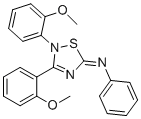
JNJ-10229570
CAS No. 524923-88-4
JNJ-10229570( JNJ10229570 | JNJ 10229570 )
Catalog No. M14856 CAS No. 524923-88-4
JNJ-10229570 (JNJ10229570) is a novel potent, selective melanocortin receptor MC1R and MC5R antagonist with binding IC50 of 270 nM and 200 nM, respectively.
Purity : >98% (HPLC)
 COA
Datasheet
HNMR
HPLC
MSDS
Handing Instructions
COA
Datasheet
HNMR
HPLC
MSDS
Handing Instructions
| Size | Price / USD | Stock | Quantity |
| 1 mL x 10 mM in DMSO | 215 | In Stock |


|
| 5MG | 188 | In Stock |
|
| 10MG | 297 | In Stock |
|
| 25MG | 471 | In Stock |
|
| 50MG | 641 | In Stock |
|
| 100MG | 830 | In Stock |
|
| 200MG | Get Quote | In Stock |
|
| 500MG | Get Quote | In Stock |
|
| 1G | Get Quote | In Stock |
|
Biological Information
-
Product NameJNJ-10229570
-
NoteResearch use only, not for human use.
-
Brief DescriptionJNJ-10229570 (JNJ10229570) is a novel potent, selective melanocortin receptor MC1R and MC5R antagonist with binding IC50 of 270 nM and 200 nM, respectively.
-
DescriptionJNJ-10229570 (JNJ10229570) is a novel potent, selective melanocortin receptor MC1R and MC5R antagonist with binding IC50 of 270 nM and 200 nM, respectively; dose dependently inhibited the production of sebaceous lipids in cultured primary human sebocytes; Topical treatment with JNJ-10229570 of human skins transplanted onto SCID mice resulted in a marked decrease in sebum-specific lipid production, sebaceous gland's size and the expression of the sebaceous differentiation marker epithelial-membrane antigen (EMA).Other Indication Phase 2 Discontinued.
-
In VitroJNJ-10229570 dose dependently inhibits the production of sebaceous lipids in cultured primary human sebocytes. JNJ-7818369 inhibits the binding of 125I-NDP-α-MSH to cells expressing human MC1R and MC5R, with IC50s of 270±120 and 200±50 nM, respectively. Nearly-identical results are obtained with the free base form of the compound. Binding to MC4R of both forms of the compound is equipotent, with IC50s of 240±170 nM. JNJ-10229570-treated cells show strong inhibition of lipid granules at 0.01 μM, and complete inhibition at 0.05 μM.
-
In VivoTopical treatment with JNJ-10229570 of human skins transplanted onto SCID mice result in a marked decrease in sebum-specific lipid production, sebaceous gland's size and the expression of the sebaceous differentiation marker epithelial-membrane antigen (EMA). Topical treatment with 0.05% JNJ-10229570 leads to a distinct reduction in both the steady-state and the newly-synthesized sebum-specific lipids, with lesser effects on triglycerides and cholesterol.
-
SynonymsJNJ10229570 | JNJ 10229570
-
PathwayGPCR/G Protein
-
TargetMelanocortin Receptor
-
RecptorMelanocortin Receptor
-
Research AreaOther Indications
-
IndicationOther Disease
Chemical Information
-
CAS Number524923-88-4
-
Formula Weight389.47
-
Molecular FormulaC22H19N3O2S
-
Purity>98% (HPLC)
-
SolubilityDMSO : 62.5 mg/mL 160.47 mM
-
SMILESCOC1=CC=CC=C1C2=N/C(SN2C3=CC=CC=C3OC)=N\C4=CC=CC=C4
-
Chemical NameBenzenamine, N-(2,3-bis(2-methoxyphenyl)-1,2,4-thiadiazol-5(2H)-ylidene)-
Shipping & Storage Information
-
Storage(-20℃)
-
ShippingWith Ice Pack
-
Stability≥ 2 years
Reference
1. Eisinger M, et al. J Dermatol Sci. 2011 Jul;63(1):23-32. doi: 10.1016/j.jdermsci.2011.04.001.
molnova catalog



related products
-
Setmelanotide
Setmelanotide (RM-493, BIM-22493, IRC-022493) is a peptide, non-selective melanocortin receptor agonist with binding Ki of 3.9/10/2.1 for hMC1R/hMC3R/hMC4R, respectively.
-
PF-00446687 hydrochl...
PF-00446687 hydrochloride (PF-446687) is a potent, selective melanocortin-4 receptor (MC4R) agonist with EC50 of 12 nM.
-
Bremelanotide acetat...
Bremelanotide acetate is an analogue of the naturally occurring peptide alpha-MSH; melanocortin receptor agonist.
