


 Cart
Cart
 sales@molnova.com



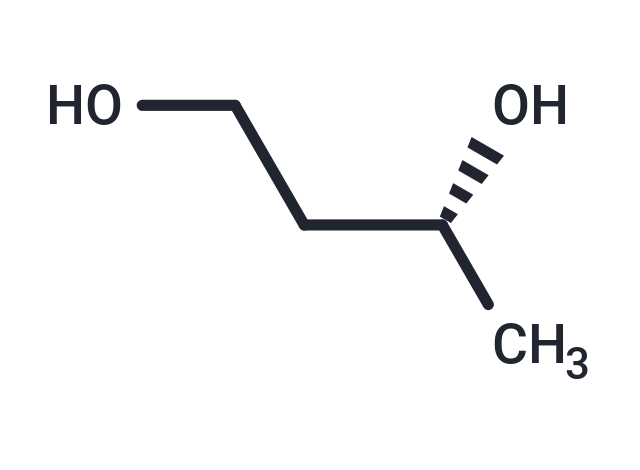
(R)-(-)-1,3-Butanediol
CAS No. 6290-03-5
(R)-(-)-1,3-Butanediol( —— )
Catalog No. M33620 CAS No. 6290-03-5
(R)-(-)-1,3-Butanediol is a novel ketogenic ester that rapidly elevates circulating r- and s- -hydroxybutyric acid levels in healthy adults, making it useful for studying metabolic system-related diseases.
Purity : >98% (HPLC)
 COA
Datasheet
HNMR
HPLC
MSDS
Handing Instructions
COA
Datasheet
HNMR
HPLC
MSDS
Handing Instructions
| Size | Price / USD | Stock | Quantity |
| 2MG | 11 | In Stock |


|
| 1G | 28 | In Stock |
|
Biological Information
-
Product Name(R)-(-)-1,3-Butanediol
-
NoteResearch use only, not for human use.
-
Brief Description(R)-(-)-1,3-Butanediol is a novel ketogenic ester that rapidly elevates circulating r- and s- -hydroxybutyric acid levels in healthy adults, making it useful for studying metabolic system-related diseases.
-
Description(R)-(-)-1,3-Butanediol is used to regulate the metabolism of carbohydrate and lipid.
-
In Vitro——
-
In Vivo——
-
Synonyms——
-
PathwayProteasome/Ubiquitin
-
TargetEndogenous Metabolite
-
RecptorEndogenous Metabolite
-
Research Area——
-
Indication——
Chemical Information
-
CAS Number6290-03-5
-
Formula Weight90.12
-
Molecular FormulaC4H10O2
-
Purity>98% (HPLC)
-
SolubilityIn Vitro:?DMSO : 100 mg/mL (1109.63 mM; Ultrasonic )
-
SMILESC[C@@H](O)CCO
-
Chemical Name——
Shipping & Storage Information
-
Storage(-20℃)
-
ShippingWith Ice Pack
-
Stability≥ 2 years
Reference
1. Ari C, et al. Exogenous Ketones Lower Blood Glucose Level in Rested and Exercised Rodent Models. Nutrients. 2019 Oct 1;11(10).?
molnova catalog



related products
-
L-Pipecolic acid
L-Pipecolic acid is a breakdown product of lysine accumulates in body fluids of infants with generalized genetic peroxisomal disorders such as Zellweger syndrome neonatal adrenoleukodystrophy.
-
Lipoxin A4
Lipoxin A4 (LXA4) is a lipoxygenase-derived arachidonate-like mediator with anti-inflammatory properties.Lipoxin A4 attenuates MSU crystal-induced NLRP3 inflammasome activation through inhibition of Nrf2, and regulates M1/M2 macrophage polarization through the FPR2-IRF pathway.
-
Biotin sulfone
Biotin sulfone is an oxidized form of biotin.
