


 Cart
Cart
 sales@molnova.com



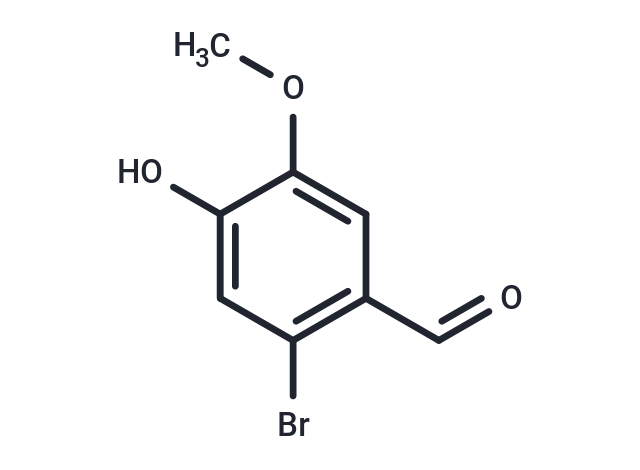
6-Bromovanillin
CAS No. 60632-40-8
6-Bromovanillin( —— )
Catalog No. M37834 CAS No. 60632-40-8
6-Bromovanillin is a biochemical reagent utilized in the synthesis of caridopa, an aromatic amino acid decarboxylase inhibitor.
Purity : >98% (HPLC)
 COA
Datasheet
HNMR
HPLC
MSDS
Handing Instructions
COA
Datasheet
HNMR
HPLC
MSDS
Handing Instructions
| Size | Price / USD | Stock | Quantity |
| 100MG | 27 | In Stock |


|
| 200MG | Get Quote | In Stock |
|
| 500MG | Get Quote | In Stock |
|
| 1G | Get Quote | In Stock |
|
Biological Information
-
Product Name6-Bromovanillin
-
NoteResearch use only, not for human use.
-
Brief Description6-Bromovanillin is a biochemical reagent utilized in the synthesis of caridopa, an aromatic amino acid decarboxylase inhibitor.
-
Description6-Bromovanillin is a biochemical reagent utilized in the synthesis of caridopa, an aromatic amino acid decarboxylase inhibitor.
-
In Vitro——
-
In Vivo——
-
Synonyms——
-
PathwayOthers
-
TargetOther Targets
-
RecptorOthers
-
Research Area——
-
Indication——
Chemical Information
-
CAS Number60632-40-8
-
Formula Weight231.04
-
Molecular FormulaC8H7BrO3
-
Purity>98% (HPLC)
-
Solubility——
-
SMILESCOc1cc(C=O)c(Br)cc1O
-
Chemical Name——
Shipping & Storage Information
-
Storage(-20℃)
-
ShippingWith Ice Pack
-
Stability≥ 2 years
Reference
molnova catalog



related products
-
HA15
HA15 targets specifically BiP/GRP78/HSPA5. HA15 exhibits anti-cancerous activity on all melanoma cells tested, including cells isolated from patients and cells that developed resistance to BRAF inhibitors.
-
Cepharadione B
Cepharadione B (compound 22) is a natural compound isolated from the leaves of Piper sanctum. Cepharadione B is a tyrosinase inhibitor with an IC50 value of 170 μM, and inhibits cell growth in A-549, SK-OV-3, SK-MEL-2, XF-498 and HCT-15 cells.
-
Crocin
General descriptionA highly unsaturared diterpene dicarboxylic acid ester found in saffron.
