


 Cart
Cart
 sales@molnova.com



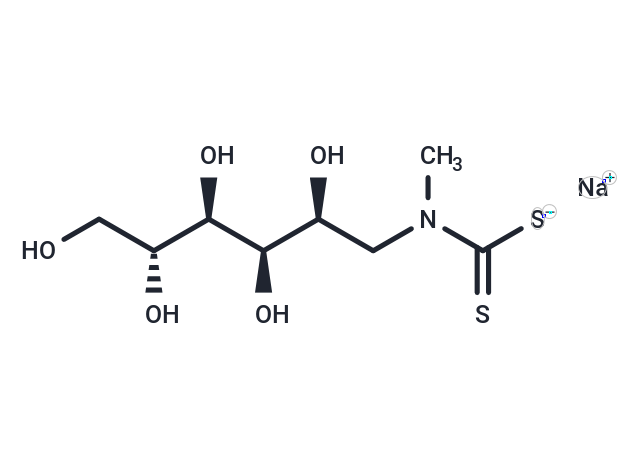
MDCG sodium
CAS No. 91840-27-6
MDCG sodium( —— )
Catalog No. M36562 CAS No. 91840-27-6
MDCG sodium (N-methyl-N-dithiocarboxyglucamine sodium) is a metal chelator that promotes biliary excretion of Cd.
Purity : >98% (HPLC)
 COA
Datasheet
HNMR
HPLC
MSDS
Handing Instructions
COA
Datasheet
HNMR
HPLC
MSDS
Handing Instructions
| Size | Price / USD | Stock | Quantity |
| 5MG | 46 | In Stock |


|
| 10MG | 77 | In Stock |
|
| 25MG | 155 | In Stock |
|
| 50MG | 226 | In Stock |
|
| 100MG | 334 | In Stock |
|
| 200MG | Get Quote | In Stock |
|
| 500MG | Get Quote | In Stock |
|
| 1G | Get Quote | In Stock |
|
Biological Information
-
Product NameMDCG sodium
-
NoteResearch use only, not for human use.
-
Brief DescriptionMDCG sodium (N-methyl-N-dithiocarboxyglucamine sodium) is a metal chelator that promotes biliary excretion of Cd.
-
DescriptionN-methyl-N-dithiocarboxyglucamine (MDCG) sodium mobilizes and promotes excretion of metallothionein-bound 109Cd in mouse model. N-methyl-N-dithiocarboxyglucamine significantly lowers the Cd content of both the liver and kidney, which is organs most susceptible to Cd-induced toxicity.
-
In Vitro——
-
In Vivo——
-
Synonyms——
-
PathwayProteasome/Ubiquitin
-
TargetEndogenous Metabolite
-
RecptorEndogenous Metabolite
-
Research Area——
-
Indication——
Chemical Information
-
CAS Number91840-27-6
-
Formula Weight293.34
-
Molecular FormulaC8H16NNaO5S2
-
Purity>98% (HPLC)
-
SolubilityIn Vitro:?DMSO : 62.5 mg/mL (213.06 mM; Ultrasonic (<60°C)
-
SMILESOC[C@@H](O)[C@@H](O)[C@H](O)[C@@H](O)CN(C)C([S-])=S.[Na+]
-
Chemical Name——
Shipping & Storage Information
-
Storage(-20℃)
-
ShippingWith Ice Pack
-
Stability≥ 2 years
Reference
1. Gale GR, et al. Effects of sodium N-methyl-N-dithiocarboxyglucamine on cadmium distribution and excretion. Life Sci. 1984 Dec 17;35(25):2571-8.?
molnova catalog



related products
-
Glucose oxidase
Glucose oxidase, an enzyme extracted from the fungus Aspergillus niger, is an important industrial enzyme in the food industry and is widely used in the deoxygenation of foods such as wine, beer, fruit juice, milk powder, and in the improvement of flour and prevention of browning of foods, etc. It has antioxidant and potential anticancer activities.
-
Allyl Methyl Sulfide
Allyl Methyl Sulfide is a bioactive organosulfur compound found in garlic with antibacterial, antioxidant, and anticancer activities.
-
2-Ketoglutaric acid
2-Ketoglutaric acid is a key molecule in the tricarboxylic acid cycleis also connected to glutamic acid and glutamine metabolisms through the transamination reactions.
