


 Cart
Cart
 sales@molnova.com



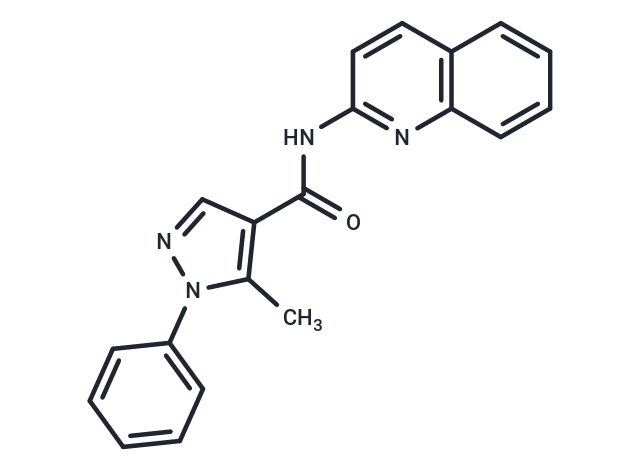
YW2036
CAS No. 2131223-92-0
YW2036( —— )
Catalog No. M36036 CAS No. 2131223-92-0
YW2036 is an inhibitor of Wnt signaling pathway.
Purity : >98% (HPLC)
 COA
Datasheet
HNMR
HPLC
MSDS
Handing Instructions
COA
Datasheet
HNMR
HPLC
MSDS
Handing Instructions
| Size | Price / USD | Stock | Quantity |
| 5MG | 98 | In Stock |


|
| 10MG | 148 | In Stock |
|
| 25MG | 236 | In Stock |
|
| 50MG | 326 | In Stock |
|
| 100MG | 437 | In Stock |
|
| 200MG | 581 | In Stock |
|
| 500MG | Get Quote | In Stock |
|
| 1G | Get Quote | In Stock |
|
Biological Information
-
Product NameYW2036
-
NoteResearch use only, not for human use.
-
Brief DescriptionYW2036 is an inhibitor of Wnt signaling pathway.
-
DescriptionYW2036 (compound 2a) is a potent Wnt/β-Catenin signaling pathway inhibitor with an IC50 value of 637 nM. YW2036 can be used in research of cancer.
-
In Vitro——
-
In Vivo——
-
Synonyms——
-
PathwayWnt/Notch/Hedgehog
-
TargetWnt/beta/catenin
-
RecptorWnt/beta-catenin
-
Research Area——
-
Indication——
Chemical Information
-
CAS Number2131223-92-0
-
Formula Weight328.37
-
Molecular FormulaC20H16N4O
-
Purity>98% (HPLC)
-
Solubility——
-
SMILESCC=1N(N=CC1C(NC2=NC3=C(C=C2)C=CC=C3)=O)C4=CC=CC=C4
-
Chemical Name——
Shipping & Storage Information
-
Storage(-20℃)
-
ShippingWith Ice Pack
-
Stability≥ 2 years
Reference
1. Yang W, et, al. Pyrazole-4-Carboxamide (YW2065): A Therapeutic Candidate for Colorectal Cancer via Dual Activities of Wnt/β-Catenin Signaling Inhibition and AMP-Activated Protein Kinase (AMPK) Activation. J Med Chem. 2019 Dec 26;62(24):11151-11164. ?
molnova catalog



related products
-
Miclxin
Miclxin (DS37262926) is a novel MIC60 inhibitor that induces apoptosis through mitochondrial stress in mutant tumor cells via β-catenin.
-
Cardiogenol C hydroc...
Cardiogenol C hydrochloride can induces the differentiation of ESCs into cardiomyocytes (EC50= 100 nM).
-
IWP-3
IWP-3 is a potent inhibitor of Wnt production with an IC50 of 40 nM. It inhibits Porcupine (Porcn), blocking the palmitoylation of Wnt proteins, and moderately inhibits CK1γ3 and CK1ε, but does not inhibit CK1α .
