


 Cart
Cart
 sales@molnova.com



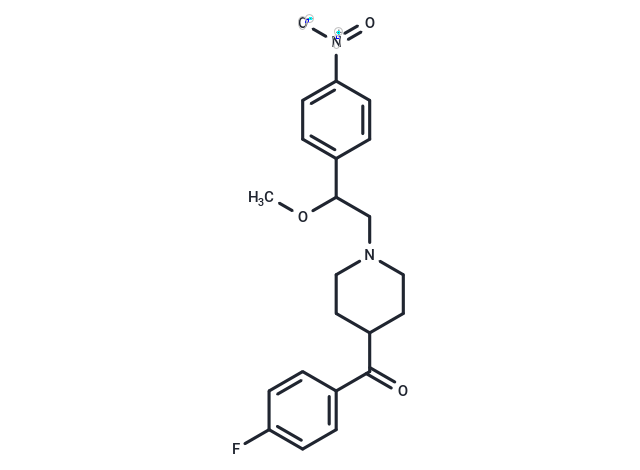
Antipsychotic agent 54
CAS No. 666859-49-0
Antipsychotic agent 54( —— )
Catalog No. M33018 CAS No. 666859-49-0
Antipsychotic agent 54 is a benzoylpiperidine compound that can be used in the study of central nervous system diseases such as psychosis and cognitive impairment.
Purity : >98% (HPLC)
 COA
Datasheet
HNMR
HPLC
MSDS
Handing Instructions
COA
Datasheet
HNMR
HPLC
MSDS
Handing Instructions
| Size | Price / USD | Stock | Quantity |
| 2MG | 125 | Get Quote |


|
| 5MG | 187 | Get Quote |
|
| 10MG | 312 | Get Quote |
|
| 25MG | 513 | Get Quote |
|
| 50MG | 725 | Get Quote |
|
| 100MG | 1008 | Get Quote |
|
| 500MG | Get Quote | Get Quote |
|
| 1G | Get Quote | Get Quote |
|
Biological Information
-
Product NameAntipsychotic agent 54
-
NoteResearch use only, not for human use.
-
Brief DescriptionAntipsychotic agent 54 is a benzoylpiperidine compound that can be used in the study of central nervous system diseases such as psychosis and cognitive impairment.
-
DescriptionTelomerase-IN-1 is a Telomerase inhibitor with an IC50 of 0.19 μM.
-
In VitroOur in vitro studies show that title compound (Telomerase-IN-1) has high inhibitory activity against telomerase and high antiproliferative capacity on SMMC-7721 cells, and has no obvious toxic effect on human normal hepatocyte cells. Telomerase-IN-1 treatment decreases the growth of cancer cells in dose- and time-dependent manners; however, the viability of L-02 shows slight changes in the compound at 10 μM.48 h of SMMC-7721 cell treatment with the Telomerase-IN-1 (20, 40, and 80 nM) causes increase of apoptosis. Forty-eight hours of SMMC-7721 cell treatment with the Telomerase-IN-1(20, 40, and 80 nM) causes significant accumulation of green fluorescence, indicating a decrease in MMP. At 40 nM, Telomerase-IN-1 significantly increases expressions of cyt-c and Bax, but the Bcl-2 level is decreased.
-
In VivoOur in vivo studies show that this compound (Telomerase-IN-1) significantly inhibits tumor growth in xenograft tumor models. Results show that endoplasmic reticulum stress (ERS) through ER over response (EOR) activates the expression of hTERT, and then induces ERS, which is believed to be intricately associated with oxidative stress and mitochondrial dysfunction, resulting in apoptotic cell death, thereby modulating the expression of downstream signaling molecules including CHOP (CAAT/enhancer-binding protein homologous protein)) and mitochondrion pathway of apoptosis, leading to inhibition of cell proliferation.
-
Synonyms——
-
PathwayCell Cycle/DNA Damage
-
TargetTelomerase
-
RecptorTelomerase
-
Research Area——
-
Indication——
Chemical Information
-
CAS Number666859-49-0
-
Formula Weight386.42
-
Molecular FormulaC21H23FN2O4
-
Purity>98% (HPLC)
-
SolubilityIn Vitro:?DMSO : 100 mg/mL (258.79 mM; Ultrasonic )
-
SMILESCOC(CN1CCC(CC1)C(=O)c1ccc(F)cc1)c1ccc(cc1)[N+]([O-])=O
-
Chemical Name——
Shipping & Storage Information
-
Storage(-20℃)
-
ShippingWith Ice Pack
-
Stability≥ 2 years
Reference
1. Cheng X, et al. Discovery of (4-bromophenyl)(3-hydroxy-4-methoxyphenyl)methanone through upregulating hTERT induces cell apoptosis and ERS. Cell Death Dis. 2017 Aug 24;8(8):e3016.?
molnova catalog



related products
-
Epithalon
Epithalon (also known as Epitalon or Epithalone) is the synthetic version of the polypeptide Epithalamin which is naturally produced in the pineal gland.
-
WAY-181187
WAY-181187 has high-affinity binding at the human 5-HT6 receptor.
-
360A
360A is a stabilizing G-Quadruplex ligand and also inhibits telomerase activity for telomerase in TRAP-G4 assay(IC50 : 300 nM).
