


 Cart
Cart
 sales@molnova.com



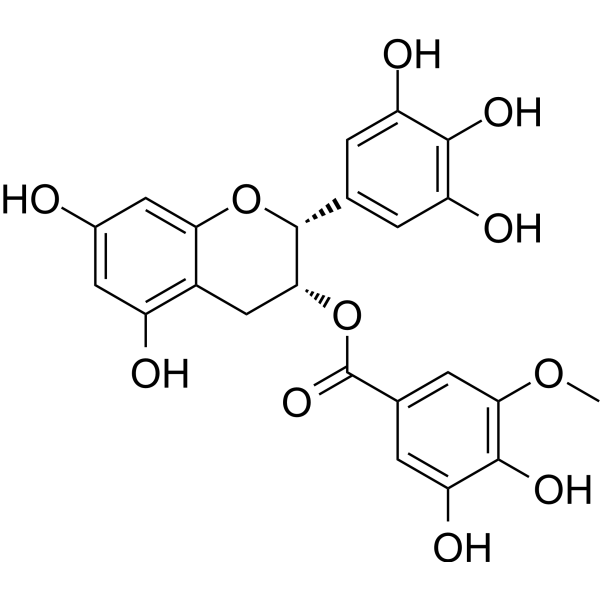
Epigallocatechin-3-(3-O-methyl) gallate
CAS No. 83104-87-4
Epigallocatechin-3-(3-O-methyl) gallate( —— )
Catalog No. M31200 CAS No. 83104-87-4
(-)-Epigallocatechin-3-(3''-O-methyl) gallate is a natural product isolated from tea leaves with strong antioxidant, cytotoxic and antibacterial activity, which enhances the adhesive stability of etching rinsing adhesives to dentin.
Purity : >98% (HPLC)
 COA
Datasheet
HNMR
HPLC
MSDS
Handing Instructions
COA
Datasheet
HNMR
HPLC
MSDS
Handing Instructions
| Size | Price / USD | Stock | Quantity |
| 5MG | 357 | In Stock |


|
| 10MG | 524 | In Stock |
|
| 50MG | Get Quote | In Stock |
|
| 100MG | Get Quote | In Stock |
|
| 200MG | Get Quote | In Stock |
|
| 500MG | Get Quote | In Stock |
|
| 1G | Get Quote | In Stock |
|
Biological Information
-
Product NameEpigallocatechin-3-(3-O-methyl) gallate
-
NoteResearch use only, not for human use.
-
Brief Description(-)-Epigallocatechin-3-(3''-O-methyl) gallate is a natural product isolated from tea leaves with strong antioxidant, cytotoxic and antibacterial activity, which enhances the adhesive stability of etching rinsing adhesives to dentin.
-
Description(-)-Epigallocatechin-3-(3''-O-methyl) gallate is a natural product isolated from tea leaves with strong antioxidant, cytotoxic and antibacterial activity, which enhances the adhesive stability of etching rinsing adhesives to dentin.
-
In Vitro——
-
In Vivo——
-
Synonyms——
-
PathwayOthers
-
TargetOther Targets
-
Recptor——
-
Research Area——
-
Indication——
Chemical Information
-
CAS Number83104-87-4
-
Formula Weight472.4
-
Molecular FormulaC23H20O11
-
Purity>98% (HPLC)
-
SolubilityIn Vitro:?DMSO : 50 mg/mL (105.84 mM)
-
SMILES——
-
Chemical Name——
Shipping & Storage Information
-
Storage(-20℃)
-
ShippingWith Ice Pack
-
Stability≥ 2 years
Reference
molnova catalog



related products
-
CGRP II, rat
Calcitonin Gene Related Peptide II is a potent, long-lasting vasodilator; activation of CGRP receptors on pancreatic β-cells increases plasma levels of pancreatic enzymes.
-
Atecegatran TFA
Atecegatran TFA is often used as an anticoagulant and can be used to treat cardiovascular disease.
-
Cortistatin-14 TFA
Cortistatin-14 is a neuropeptide have structural similarity to somatostatin-14. It is produced in the cortex and hippocampus of central nervous system.
