


 Cart
Cart
 sales@molnova.com



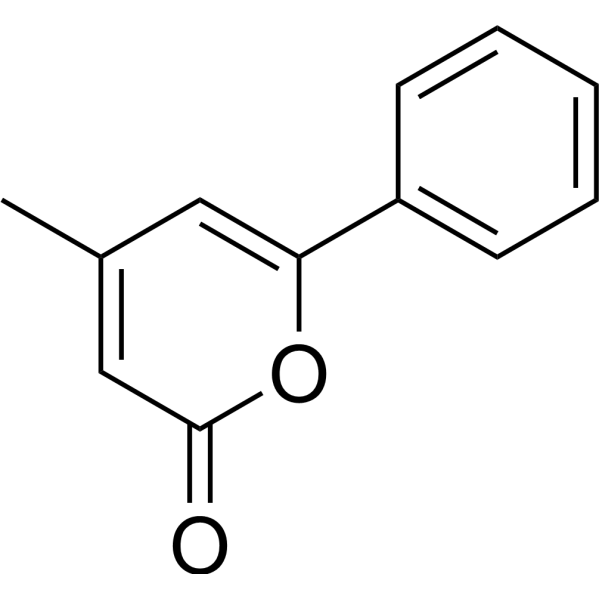
4-methyl-6-phenyl-2H-pyranone
CAS No. 4467-30-5
4-methyl-6-phenyl-2H-pyranone( 4-methyl-6-phenyl-2H-pyranone )
Catalog No. M29252 CAS No. 4467-30-5
4-methyl-6-phenyl-2H-pyranone is derived from Scutellaria baicalensis Georgi and improves mitochondrial functionality to protect astrocytes against hydrogen peroxide-induced toxicity.
Purity : >98% (HPLC)
 COA
Datasheet
HNMR
HPLC
MSDS
Handing Instructions
COA
Datasheet
HNMR
HPLC
MSDS
Handing Instructions
| Size | Price / USD | Stock | Quantity |
| 1 mL x 10 mM in DMSO | 49 | In Stock |


|
| 5MG | 48 | In Stock |
|
| 10MG | 67 | In Stock |
|
| 100MG | Get Quote | In Stock |
|
| 200MG | Get Quote | In Stock |
|
| 500MG | Get Quote | In Stock |
|
| 1G | Get Quote | In Stock |
|
Biological Information
-
Product Name4-methyl-6-phenyl-2H-pyranone
-
NoteResearch use only, not for human use.
-
Brief Description4-methyl-6-phenyl-2H-pyranone is derived from Scutellaria baicalensis Georgi and improves mitochondrial functionality to protect astrocytes against hydrogen peroxide-induced toxicity.
-
Description4-methyl-6-phenyl-2H-pyranone is derived from Scutellaria baicalensis Georgi and improves mitochondrial functionality to protect astrocytes against hydrogen peroxide-induced toxicity.
-
In Vitro——
-
In Vivo——
-
Synonyms4-methyl-6-phenyl-2H-pyranone
-
PathwayOthers
-
TargetOther Targets
-
Recptor——
-
Research Area——
-
Indication——
Chemical Information
-
CAS Number4467-30-5
-
Formula Weight186.21
-
Molecular FormulaC12H10O2
-
Purity>98% (HPLC)
-
Solubility——
-
SMILESCc1cc(oc(=O)c1)-c1ccccc1
-
Chemical Name——
Shipping & Storage Information
-
Storage(-20℃)
-
ShippingWith Ice Pack
-
Stability≥ 2 years
Reference
molnova catalog



related products
-
Ipamorelin
Ipamorelin is a growth-hormone-releasing peptide induces longitudinal bone growth in rats.
-
Triptorelin
Triptorelin is a synthetic gonadotropin-releasing hormone (GnRH) peptide agonist that binds to the GnRH receptor.
-
Dexrazoxane
A derivative of EDTA that chelates iron and reduces the number of metal ions complexed with anthracycline and, consequently, decrease the formation of superoxide radicals.
