


 Cart
Cart
 sales@molnova.com



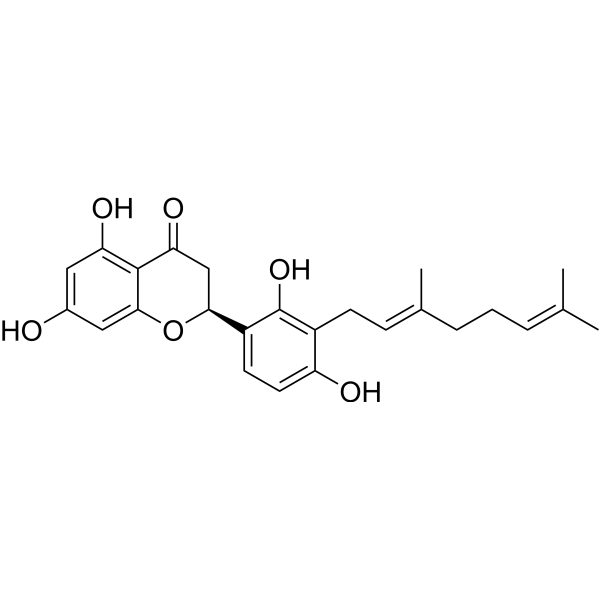
Sanggenol A
CAS No. 174423-30-4
Sanggenol A( —— )
Catalog No. M29228 CAS No. 174423-30-4
Sanggenol A inhibits influenza A viral and pneumococcal neuraminidase, hence functioning as a dual-acting anti-infective agent.
Purity : >98% (HPLC)
 COA
Datasheet
HNMR
HPLC
MSDS
Handing Instructions
COA
Datasheet
HNMR
HPLC
MSDS
Handing Instructions
| Size | Price / USD | Stock | Quantity |
| 10MG | 999 | In Stock |


|
| 100MG | Get Quote | In Stock |
|
| 200MG | Get Quote | In Stock |
|
| 500MG | Get Quote | In Stock |
|
| 1G | Get Quote | In Stock |
|
Biological Information
-
Product NameSanggenol A
-
NoteResearch use only, not for human use.
-
Brief DescriptionSanggenol A inhibits influenza A viral and pneumococcal neuraminidase, hence functioning as a dual-acting anti-infective agent.
-
DescriptionSanggenol A inhibits influenza A viral and pneumococcal neuraminidase, hence functioning as a dual-acting anti-infective agent.(In Vitro):Sanggenol A shows neuroprotective activity on glutamate-induced cell death in HT22 cells with EC50 values of 34.03 ± 7.71 μM. Sanggenol A has hepatoprotective activity on t-BHP-induced oxidative stress in HepG2 cells.
-
In Vitro——
-
In Vivo——
-
Synonyms——
-
PathwayMicrobiology/Virology
-
TargetInfluenza Virus
-
RecptorInfluenza Virus
-
Research Area——
-
Indication——
Chemical Information
-
CAS Number174423-30-4
-
Formula Weight424.493
-
Molecular FormulaC25H28O6
-
Purity>98% (HPLC)
-
Solubility——
-
SMILESCC(C)=CCC\C(C)=C\Cc1c(O)ccc([C@@H]2CC(=O)c3c(O)cc(O)cc3O2)c1O
-
Chemical Name——
Shipping & Storage Information
-
Storage(-20℃)
-
ShippingWith Ice Pack
-
Stability≥ 2 years
Reference
molnova catalog



related products
-
ML303
ML303 is an antagonist of pyrazolopyridine influenza virus nonstructural protein 1 (NS1) (IC90 : 155 nM).
-
zapnometinib
zapnometinib is a MEK inhibitor.
-
CEF6
CEF6, a HLA-B7 restricted influenza virus nucleoprotein epitope, belongs to the CEF control peptides. The CEF control peptides are 8-12 amino acids in length, with sequences derived from the human cytomegalovirus, Epstein-Barr virus and influenza virus.
