


 Cart
Cart
 sales@molnova.com



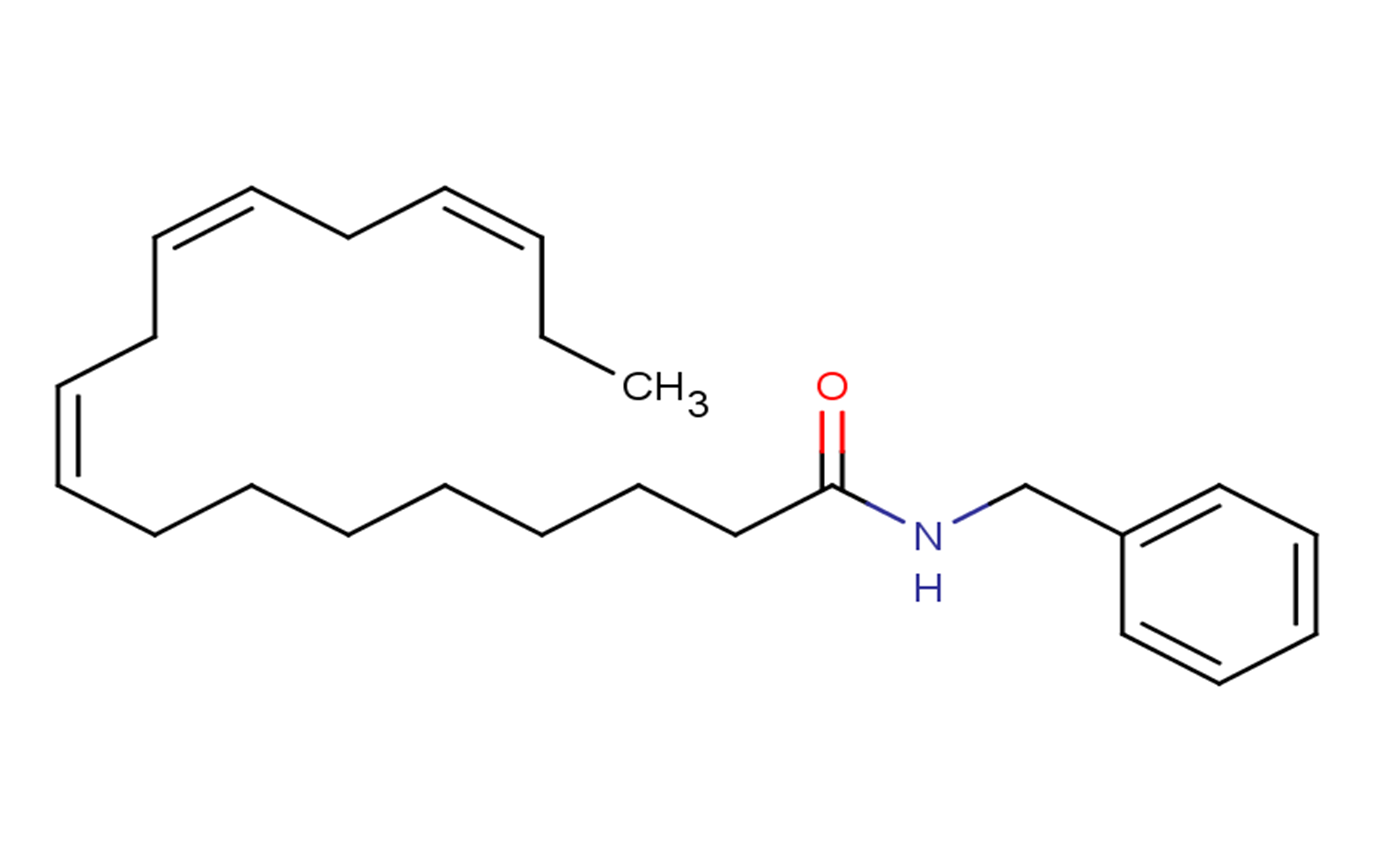
N-Benzyllinolenamide
CAS No. 883715-18-2
N-Benzyllinolenamide( —— )
Catalog No. M24900 CAS No. 883715-18-2
N-Benzyllinolenamide is a natural product. It is an inhibitor of fatty acid amide hydrolase (FAAH, IC50 of 41.8 μM).
Purity : >98% (HPLC)
 COA
Datasheet
HNMR
HPLC
MSDS
Handing Instructions
COA
Datasheet
HNMR
HPLC
MSDS
Handing Instructions
| Size | Price / USD | Stock | Quantity |
| 1 mL x 10 mM in DMSO | 187 | In Stock |


|
| 5MG | 180 | In Stock |
|
| 10MG | 275 | In Stock |
|
| 25MG | 465 | In Stock |
|
| 50MG | 649 | In Stock |
|
| 100MG | 900 | In Stock |
|
| 200MG | 1190 | In Stock |
|
| 500MG | Get Quote | In Stock |
|
| 1G | Get Quote | In Stock |
|
Biological Information
-
Product NameN-Benzyllinolenamide
-
NoteResearch use only, not for human use.
-
Brief DescriptionN-Benzyllinolenamide is a natural product. It is an inhibitor of fatty acid amide hydrolase (FAAH, IC50 of 41.8 μM).
-
DescriptionN-Benzyllinolenamide is a natural product. It is an inhibitor of fatty acid amide hydrolase (FAAH, IC50 of 41.8 μM).
-
In Vitro——
-
In Vivo——
-
Synonyms——
-
PathwayMetabolic Enzyme/Protease
-
TargetFAAH
-
RecptorFAAH
-
Research Area——
-
Indication——
Chemical Information
-
CAS Number883715-18-2
-
Formula Weight367.6
-
Molecular FormulaC25H37NO
-
Purity>98% (HPLC)
-
SolubilityDMSO:10 mM
-
SMILESCC/C=C\C/C=C\C/C=C\CCCCCCCC(NCC1=CC=CC=C1)=O
-
Chemical Name——
Shipping & Storage Information
-
Storage(-20℃)
-
ShippingWith Ice Pack
-
Stability≥ 2 years
Reference
1.Qin Yang , Wenwen Jin , Xueyuan Lv.Effects of macamides on endurance capacity and anti-fatigue property in prolonged swimming mice. Pharm Biol. 2016;54(5):827-34.
molnova catalog



related products
-
CB2R/FAAH?modulator-...
CB2R/FAAH?modulator-1, a cannabinoid type 2 receptor (CB2R) agonist, is also a fatty acid amide hydrolase (FAAH) inhibitor (IC50=4 μM) that reduces the production of pro-inflammatory and anti-inflammatory cytokines and is commonly used in inflammation studies.
-
FAAH-IN-2
FAAH-IN-2 is a potent inhibitor of FAAH(fatty acid amide hydrolase).
-
AP-III-a4
AP-III-a4 (ENOblock) is the first nonsubstrate analogue inhibitor of enolase with IC50 of 0.576 μM.
