


 Cart
Cart
 sales@molnova.com



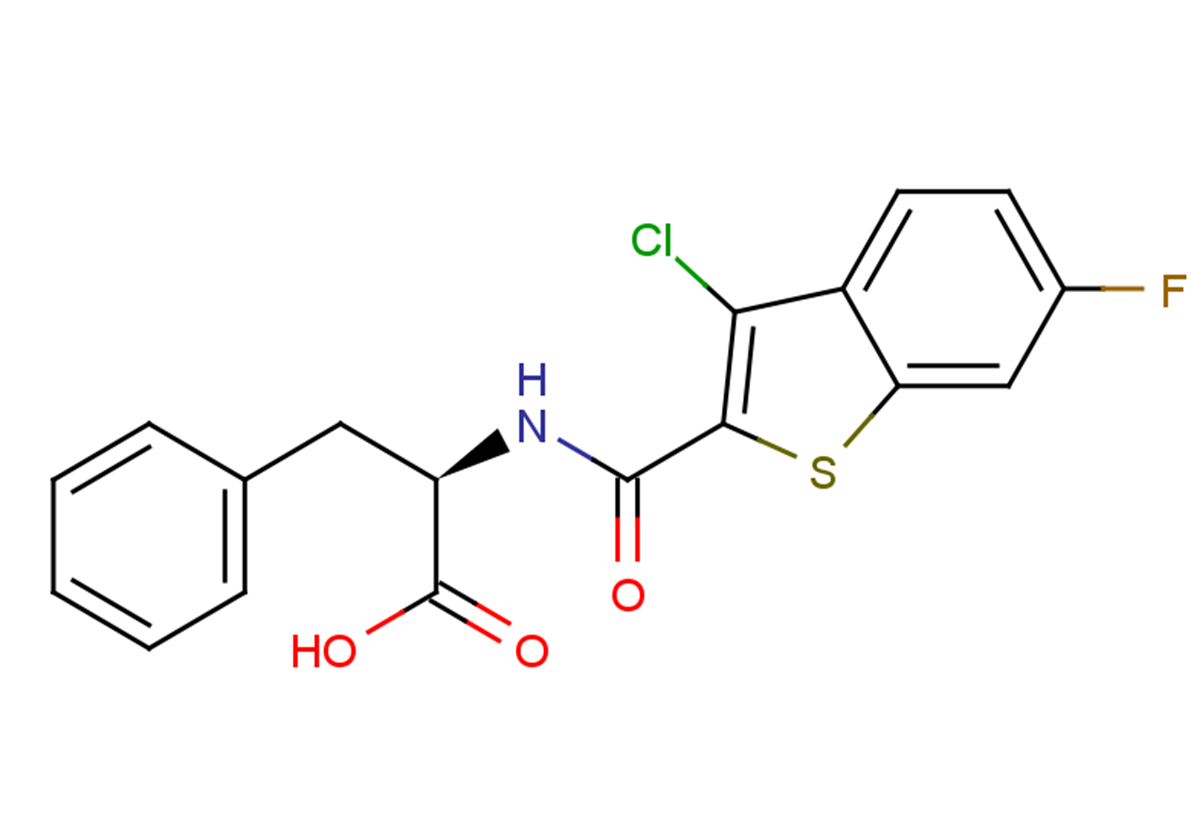
CU CPT 4a
CAS No. 1279713-77-7
CU CPT 4a( —— )
Catalog No. M23444 CAS No. 1279713-77-7
CU CPT 4a is a selective TLR3 inhibitor (IC50: 3.44 μM in RAW 264.7 cells).
Purity : >98% (HPLC)
 COA
Datasheet
HNMR
HPLC
MSDS
Handing Instructions
COA
Datasheet
HNMR
HPLC
MSDS
Handing Instructions
| Size | Price / USD | Stock | Quantity |
| 1 mL x 10 mM in DMSO | 116 | In Stock |


|
| 5MG | 105 | In Stock |
|
| 10MG | 178 | In Stock |
|
| 25MG | 377 | In Stock |
|
| 50MG | 551 | In Stock |
|
| 100MG | 786 | In Stock |
|
| 200MG | 1070 | In Stock |
|
| 500MG | Get Quote | In Stock |
|
| 1G | Get Quote | In Stock |
|
Biological Information
-
Product NameCU CPT 4a
-
NoteResearch use only, not for human use.
-
Brief DescriptionCU CPT 4a is a selective TLR3 inhibitor (IC50: 3.44 μM in RAW 264.7 cells).
-
DescriptionCU CPT 4a is a selective TLR3 inhibitor (IC50: 3.44 μM in RAW 264.7 cells). It can inhibit TLR3/dsRNA complex-mediated downstream signaling pathways and inhibit the production of TNF-α and IL-1β in whole cells.
-
In VitroCU-CPT 4a shows dose-dependent inhibitory effects blocking Poly (I:C)-induced TLR3 activation with an IC50 of 3.44 μM.CU-CPT 4a competes with dsRNA for binding to TLR3 with a Ki of 2.96 μM.
-
In Vivo——
-
Synonyms——
-
PathwayImmunology/Inflammation
-
TargetTLR
-
RecptorTLR3
-
Research Area——
-
Indication——
Chemical Information
-
CAS Number1279713-77-7
-
Formula Weight377.82
-
Molecular FormulaC18H13ClFNO3S
-
Purity>98% (HPLC)
-
SolubilityDMSO:<37.78mg/ml
-
SMILESO=C(O)[C@@H](CC1=CC=CC=C1)NC(C2=C(Cl)C3=CC=C(F)C=C3S2)=O
-
Chemical Name——
Shipping & Storage Information
-
Storage(-20℃)
-
ShippingWith Ice Pack
-
Stability≥ 2 years
Reference
1.Cheng K , Wang X , Yin H . Small-Molecule Inhibitors of the TLR3/dsRNA Complex[J]. Journal of the American Chemical Society, 2011, 133(11):p.3764-3767.
molnova catalog



related products
-
GSK2245035
GSK2245035 is a highly potent, selective TLR7 agonist that selectively induces TFN-α in PBMC assays with pEC50 of 9.3, >2 logs selectivity over TNFα pEC50.
-
CEP-40783
CEP-40783 is an effective, specific and orally active AXL/c-Met inhibitor (IC50: 7/12 nM). It also inhibits MER and TYRO3 (IC50: 29/19 nM).
-
TLR7 agonist 3
TLR7 agonist 3 is a Toll-like receptor 7 (TLR7) agonist that has anticancer activity and is used in the study of diseases of the immune system.
