


 Cart
Cart
 sales@molnova.com



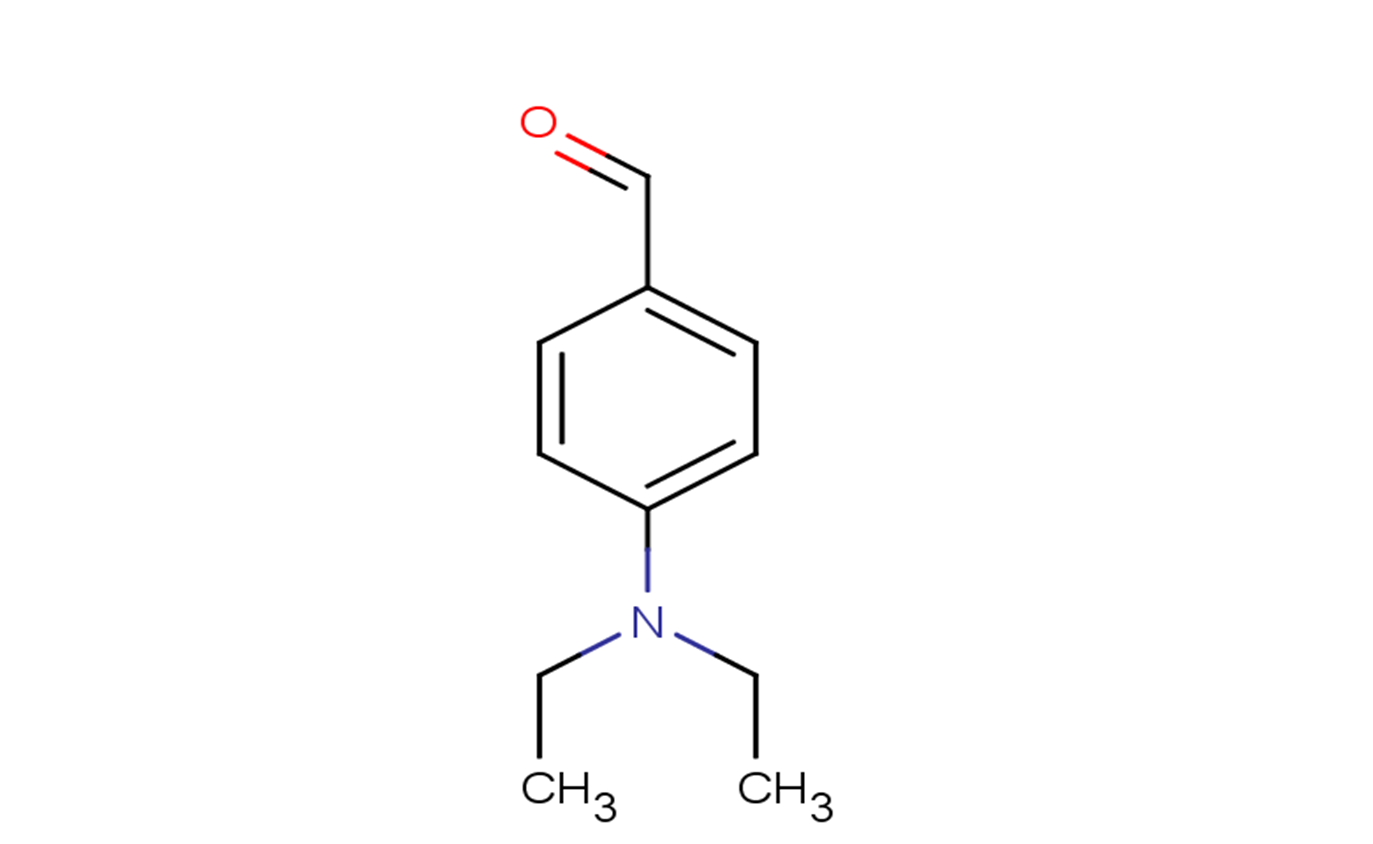
4-Diethylaminobenzaldehyde
CAS No. 120-21-8
4-Diethylaminobenzaldehyde( —— )
Catalog No. M23373 CAS No. 120-21-8
4-Diethylaminobenzaldehyde is a reversible aldehyde dehydrogenase (ALDH) inhibitor (Ki: 4 nM for ALDH1).
Purity : >98% (HPLC)
 COA
Datasheet
HNMR
HPLC
MSDS
Handing Instructions
COA
Datasheet
HNMR
HPLC
MSDS
Handing Instructions
| Size | Price / USD | Stock | Quantity |
| 1 mL x 10 mM in DMSO | 29 | In Stock |


|
| 100MG | 40 | In Stock |
|
| 200MG | 57 | In Stock |
|
| 500MG | 91 | In Stock |
|
| 1G | 132 | In Stock |
|
Biological Information
-
Product Name4-Diethylaminobenzaldehyde
-
NoteResearch use only, not for human use.
-
Brief Description4-Diethylaminobenzaldehyde is a reversible aldehyde dehydrogenase (ALDH) inhibitor (Ki: 4 nM for ALDH1).
-
Description4-Diethylaminobenzaldehyde is a reversible aldehyde dehydrogenase (ALDH) inhibitor (Ki: 4 nM for ALDH1). It displays a potent anti-androgenic effect (IC50: 1.71μM).
-
In Vitro——
-
In Vivo——
-
Synonyms——
-
PathwayMetabolic Enzyme/Protease
-
TargetDehydrogenase
-
RecptorALDH
-
Research Area——
-
Indication——
Chemical Information
-
CAS Number120-21-8
-
Formula Weight177.24
-
Molecular FormulaC11H15NO
-
Purity>98% (HPLC)
-
SolubilityDMSO:10 mM
-
SMILESO=CC1=CC=C(N(CC)CC)C=C1
-
Chemical Name——
Shipping & Storage Information
-
Storage(-20℃)
-
ShippingWith Ice Pack
-
Stability≥ 2 years
Reference
1.Luo M, et al. Diethylaminobenzaldehyde is a covalent, irreversible inactivator of ALDH7A1. ACS Chem Biol. 2015 Mar 20;10(3):693-7.
molnova catalog



related products
-
CP-642931
CP-642931 (Sorbitol dehydrogenase-IN-1) is an orally active and highly potent sorbitol dehydrogenase inhibitor for the study of diabetes and cardiovascular disease.
-
Qc1
Qc1 is an inhibitor of threonine dehydrogenase (TDH) inhibitor and can be used in studies about metabolic diseases.
-
Isovaleramide
Isovaleramide is an anticonvulsant molecule isolated from Valeriana pavonii, it inhibits the liver alcohol dehydrogenases.
