


 Cart
Cart
 sales@molnova.com



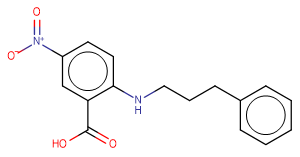
NPPB
CAS No. 107254-86-4
NPPB( —— )
Catalog No. M20908 CAS No. 107254-86-4
NPPB is a chloride channel blocker with IC50 of 80 nM .
Purity : >98% (HPLC)
 COA
Datasheet
HNMR
HPLC
MSDS
Handing Instructions
COA
Datasheet
HNMR
HPLC
MSDS
Handing Instructions
| Size | Price / USD | Stock | Quantity |
| 1 mL x 10 mM in DMSO | 48 | In Stock |


|
| 10MG | 48 | In Stock |
|
| 25MG | 89 | In Stock |
|
| 50MG | 151 | In Stock |
|
| 100MG | 259 | In Stock |
|
| 200MG | Get Quote | In Stock |
|
| 500MG | Get Quote | In Stock |
|
| 1G | Get Quote | In Stock |
|
Biological Information
-
Product NameNPPB
-
NoteResearch use only, not for human use.
-
Brief DescriptionNPPB is a chloride channel blocker with IC50 of 80 nM .
-
DescriptionNPPB is a chloride channel blocker with IC50 of 80 nM .
-
In Vitro——
-
In Vivo——
-
Synonyms——
-
PathwayMembrane Transporter/Ion Channel
-
TargetChloride Channel
-
RecptorChloride channel
-
Research Area——
-
Indication——
Chemical Information
-
CAS Number107254-86-4
-
Formula Weight300.31
-
Molecular FormulaC16H16N2O4
-
Purity>98% (HPLC)
-
SolubilityDMSO:150 mg/mL (499.48 mM)
-
SMILESO=C(O)c1cc([N+](=O)[O-])ccc1NCCCc1ccccc1
-
Chemical Name5-Nitro-2-(3-phenylpropylamino) benzoic acid
Shipping & Storage Information
-
Storage(-20℃)
-
ShippingWith Ice Pack
-
Stability≥ 2 years
Reference
1.Taniguchi Y Tonai-Kachi H Shinjo K . 5-Nitro-2-(3-Phenylpropylamino)benzoic Acid Is a GPR35 Agonist[J]. Pharmacology 2008 82(4):245-249.
molnova catalog



related products
-
Chlorotoxin
Chlorotoxin is a 36-amino acid peptide found in the venom of the deathstalker scorpion (Leiurus quinquestriatus).
-
VU 0240551
VU 0240551 is a potent, selecticve inhibitor of the neuronal K-Cl cotransporter KCC2 with IC50 of 568 nM in K+ uptake assay in KCC2-overexpressing cells.
-
VU 0463271
VU 0463271 is a potent, selecitve inhibitor of the neuronal K-Cl cotransporter KCC2 with IC50 of 61 nM.
