


 Cart
Cart
 sales@molnova.com



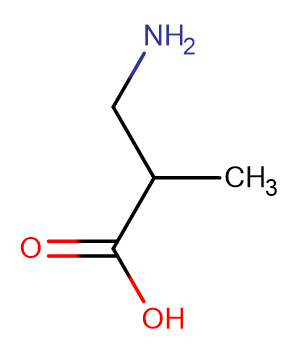
DL-3-AMINOISOBUTYRIC ACID
CAS No. 144-90-1
DL-3-AMINOISOBUTYRIC ACID( 3-Amino-2-methylpropanoic acid | α-Methyl-β-alanine )
Catalog No. M19753 CAS No. 144-90-1
beta-aminoisobutyric acid is the product from the conversion of N-carbamyl-beta-aminoisobutyric acid by the enzyme Beta-ureidopropionase (EC 3.5.1.6) the last step in pyrimidine degradation. Beta-ureidopropionase deficiency is an inborn error of pyrimidine degradation associated with neurological abnormalities.
Purity : >98% (HPLC)
 COA
Datasheet
HNMR
HPLC
MSDS
Handing Instructions
COA
Datasheet
HNMR
HPLC
MSDS
Handing Instructions
| Size | Price / USD | Stock | Quantity |
| 1 mL x 10 mM in DMSO | 28 | In Stock |


|
| 100MG | 27 | In Stock |
|
| 200MG | Get Quote | In Stock |
|
| 500MG | Get Quote | In Stock |
|
| 1G | Get Quote | In Stock |
|
Biological Information
-
Product NameDL-3-AMINOISOBUTYRIC ACID
-
NoteResearch use only, not for human use.
-
Brief Descriptionbeta-aminoisobutyric acid is the product from the conversion of N-carbamyl-beta-aminoisobutyric acid by the enzyme Beta-ureidopropionase (EC 3.5.1.6) the last step in pyrimidine degradation. Beta-ureidopropionase deficiency is an inborn error of pyrimidine degradation associated with neurological abnormalities.
-
Descriptionbeta-aminoisobutyric acid is the product from the conversion of N-carbamyl-beta-aminoisobutyric acid by the enzyme Beta-ureidopropionase (EC 3.5.1.6) the last step in pyrimidine degradation. Beta-ureidopropionase deficiency is an inborn error of pyrimidine degradation associated with neurological abnormalities.
-
In Vitro——
-
In VivoWeight is slightly decreased in the mice by the end of 3-Amino-2-methylpropanoic acid (BAIBA) treatment. Analysis of body composition using MRI demonstrates BAIBA treatment significantly decreases body fat in the mice. Consistent with the effects on thermogenic and β-oxidation gene expression and body weights, analysis with metabolic cages indicates that oxygen consumption (VO2) and whole body energy expenditure are increased in the BAIBA treated mice without any significant difference in activity or food intake. The mice are also challenged with an intraperitoneal glucose tolerance test (IPGTT). BAIBA is found to significantly improve the glucose tolerance in the mice as determined by the area under the curve of the IPGTT.
-
Synonyms3-Amino-2-methylpropanoic acid | α-Methyl-β-alanine
-
PathwayProteasome/Ubiquitin
-
TargetEndogenous Metabolite
-
RecptorHuman Endogenous Metabolite
-
Research Area——
-
Indication——
Chemical Information
-
CAS Number144-90-1
-
Formula Weight103.12
-
Molecular FormulaC4H9NO2
-
Purity>98% (HPLC)
-
SolubilityDMSO:10 mM
-
SMILESCC(CN)C(O)=O
-
Chemical Name——
Shipping & Storage Information
-
Storage(-20℃)
-
ShippingWith Ice Pack
-
Stability≥ 2 years
Reference
1.Kuilenburg A B P V Meinsma R Beke E et al. beta-Ureidopropionase deficiency: an inborn error of pyrimidine degradation associated with neurological abnormalities.[J]. Human Molecular Genetics 2004 13(22):2793-2801.
molnova catalog



related products
-
6PPD-Q
6PPD-Q (6PPD-Quinone), a contaminant present in the environment and soil, is a derivative of the tire antioxidant N-(1,3-dimethylbutyl)-N'-phenyl-p-phenylenediamine (6PPD), which impairs the quality of spermatozoa in mice and induces impaired male fertility.
-
MAHMA NONOate
MAHMA NONOate is a pH-dependent NO donor.MAHMA NONOate inhibits collagen or ADP-induced platelet aggregation.
-
5-Methoxytryptophol
5-Methoxytryptophol is a pineal indoleamine derived from serotonin shown to be biologically active in a number of species.
