


 Cart
Cart
 sales@molnova.com



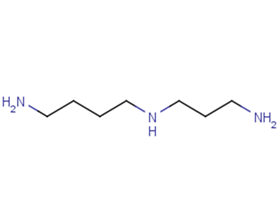
Spermidine
CAS No. 124-20-9
Spermidine( N-(4-Aminobutyl)-13-diaminopropane | N-(3-Aminopropyl)-14-diaminobutane )
Catalog No. M19710 CAS No. 124-20-9
Spermidine inhibits NOS1 (nNOS). Spermidine binds and precipitates DNA and may be used for purification of DNA binding proteins. Spermidine activates PNK (polynucleotide kinase T4). Spermidine binds to and activates NMDA and has been shown to potentiate NMDA-induced currents in a concentration-dependent manner.
Purity : >98% (HPLC)
 COA
Datasheet
HNMR
HPLC
MSDS
Handing Instructions
COA
Datasheet
HNMR
HPLC
MSDS
Handing Instructions
| Size | Price / USD | Stock | Quantity |
| 50MG | 29 | In Stock |


|
| 100MG | 41 | In Stock |
|
| 200MG | 48 | In Stock |
|
| 500MG | 61 | In Stock |
|
| 1G | 75 | In Stock |
|
Biological Information
-
Product NameSpermidine
-
NoteResearch use only, not for human use.
-
Brief DescriptionSpermidine inhibits NOS1 (nNOS). Spermidine binds and precipitates DNA and may be used for purification of DNA binding proteins. Spermidine activates PNK (polynucleotide kinase T4). Spermidine binds to and activates NMDA and has been shown to potentiate NMDA-induced currents in a concentration-dependent manner.
-
DescriptionSpermidine inhibits NOS1 (nNOS). Spermidine binds and precipitates DNA and may be used for purification of DNA binding proteins. Spermidine activates PNK (polynucleotide kinase T4). Spermidine binds to and activates NMDA and has been shown to potentiate NMDA-induced currents in a concentration-dependent manner.
-
In VitroSpermidine?plays a crucial role of against abiotic stresses, such as salt, drought, heat, and salinity-alkalinity stresses in tomato, cucumber, rice.
-
In Vivo——
-
SynonymsN-(4-Aminobutyl)-13-diaminopropane | N-(3-Aminopropyl)-14-diaminobutane
-
PathwayProteasome/Ubiquitin
-
TargetEndogenous Metabolite
-
RecptorHuman Endogenous Metabolite
-
Research Area——
-
Indication——
Chemical Information
-
CAS Number124-20-9
-
Formula Weight145.25
-
Molecular FormulaC7H19N3
-
Purity>98% (HPLC)
-
SolubilityDMSO:≥ 33.33 mg/mL (229.47 mM)
-
SMILESNCCCCNCCCN
-
Chemical Name——
Shipping & Storage Information
-
Storage(-20℃)
-
ShippingWith Ice Pack
-
Stability≥ 2 years
Reference
1.Krug M S Berger S L . First-strand cDNA synthesis primed with oligo(dT)[J]. Methods Enzymol 1987 152:316-325.
molnova catalog



related products
-
2,6-Dibromophenol
2,6-Dibromophenol is extracted from the skin and muscle of flatfish.
-
Leukotriene C4
Leukotriene C4 (LTC4) is an arachidonate lipid mediator that regulates leukocyte recruitment and function at sites of inflammation.
-
Glyceryl trimyristat...
Within the cell glyceryl trimyristate is primarily located in the membrane (predicted from logP) and adiposome. glyceryl trimyristate exists in all eukaryotes ranging from yeast to humans. In humans glyceryl trimyristate is involved in the metabolic disorder called de novo triacylglycerol biosynthesis glyceryl trimyristate pathway.
