


 Cart
 sales@molnova.com




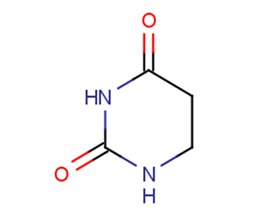
Dihydrouracil
CAS No. 504-07-4
Dihydrouracil( 56-Dihydrouracil )
Catalog No. M19694 CAS No. 504-07-4
56-Dihydrouracil is an intermediate breakdown product of uracil.
Purity : >98% (HPLC)
 COA
Datasheet
HNMR
HPLC
MSDS
Handing Instructions
| Size | Price / USD | Stock | Quantity |
| 1 mL x 10 mM in DMSO | 28 | In Stock |


|
| 100MG | 27 | In Stock |
|
| 200MG | Get Quote | In Stock |
|
| 500MG | Get Quote | In Stock |
|
| 1G | Get Quote | In Stock |
|
Biological Information
-
Product NameDihydrouracil
-
NoteResearch use only, not for human use.
-
Brief Description56-Dihydrouracil is an intermediate breakdown product of uracil.
-
Description56-Dihydrouracil is an intermediate breakdown product of uracil.
-
In Vitro——
-
In Vivo——
-
Synonyms56-Dihydrouracil
-
PathwayProteasome/Ubiquitin
-
TargetEndogenous Metabolite
-
RecptorHuman Endogenous Metabolite
-
Research Area——
-
Indication——
Chemical Information
-
CAS Number504-07-4
-
Formula Weight114.1
-
Molecular FormulaC4H6N2O2
-
Purity>98% (HPLC)
-
SolubilityDMSO:10 mM
-
SMILESO=C1CCNC(=O)N1
-
Chemical Name——
Shipping & Storage Information
-
Storage(-20℃)
-
ShippingWith Ice Pack
-
Stability≥ 2 years
Reference
1.Sreekumar A et al.Metabolomic profiles delineate potential role for sarcosine in prostate cancer progression.Nature. 2009 Feb 12;457(7231):910-4. doi: 10.1038/nature07762.
molnova catalog



related products
-
Pyridoxylamine
Pyridoxylamine is an inhibitor of advanced glycation end production (AGEs) and lipoxidation end products (ALEs).
-
Heptacosanoic acid
Heptacosanoic acid is a compound derived from Rhodosporidium kratochvilovae HIMPA1, a novel oil-bearing yeast isolated from Himalayan permafrost.
-
7α,25-Dihydroxychole...
7α, 25-dihydroxycholesterol (7α,25-OHC) is a potent and selective agonist and endogenous ligand of the orphan GPCR receptor EBI2 (GPR183). 7α, 25-dihydroxycholesterol can serve as a chemokine directing migration of B cells, T cells and dendritic cells[1][2], and it is highly potent at activating EBI2 (EC50=140 pM; Kd=450 pM).
