


 Cart
Cart
 sales@molnova.com



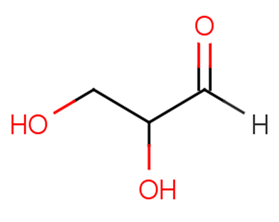
DL-Glyceraldehyde
CAS No. 56-82-6
DL-Glyceraldehyde( Glyceric aldehyde )
Catalog No. M19681 CAS No. 56-82-6
Glyceraldehyde is produced from the action of the enzyme glyceraldehyde dehydrogenase which converts glycerol to glyceraldehyde using NADP as a cofactor. When present at sufficiently high levels glyceraldehyde can be a cytotoxin and a mutagen. A cytotoxin is a compound that kills cells.
Purity : >98% (HPLC)
 COA
Datasheet
HNMR
HPLC
MSDS
Handing Instructions
COA
Datasheet
HNMR
HPLC
MSDS
Handing Instructions
| Size | Price / USD | Stock | Quantity |
| 1 mL x 10 mM in DMSO | 28 | In Stock |


|
| 25MG | 42 | In Stock |
|
| 50MG | 66 | In Stock |
|
| 100MG | 105 | In Stock |
|
| 200MG | Get Quote | In Stock |
|
| 500MG | 263 | In Stock |
|
| 1G | Get Quote | In Stock |
|
Biological Information
-
Product NameDL-Glyceraldehyde
-
NoteResearch use only, not for human use.
-
Brief DescriptionGlyceraldehyde is produced from the action of the enzyme glyceraldehyde dehydrogenase which converts glycerol to glyceraldehyde using NADP as a cofactor. When present at sufficiently high levels glyceraldehyde can be a cytotoxin and a mutagen. A cytotoxin is a compound that kills cells.
-
DescriptionGlyceraldehyde is produced from the action of the enzyme glyceraldehyde dehydrogenase which converts glycerol to glyceraldehyde using NADP as a cofactor. When present at sufficiently high levels glyceraldehyde can be a cytotoxin and a mutagen. A cytotoxin is a compound that kills cells. A mutagen is a compound that causes mutations in DNA. Glyceraldehyde is a highly reactive compound that can modify and cross-link proteins. Glyceraldehyde-modified proteins appear to be cytotoxic depress intracellular glutathione levels and induce reactive oxygen species (ROS) production (PMID: 14981296 ). Glyceraldehyde has been shown to cause chromosome damage to human cells in culture and is mutagenic in the Ames bacterial test.
-
In Vitro——
-
In Vivo——
-
SynonymsGlyceric aldehyde
-
PathwayEndocrinology/Hormones
-
TargetReductase
-
RecptorAldose reductase
-
Research Area——
-
Indication——
Chemical Information
-
CAS Number56-82-6
-
Formula Weight90.08
-
Molecular FormulaC3H6O3
-
Purity>98% (HPLC)
-
SolubilityDMSO:10 mM
-
SMILESOCC(O)C=O
-
Chemical Name——
Shipping & Storage Information
-
Storage(-20℃)
-
ShippingWith Ice Pack
-
Stability≥ 2 years
Reference
1.Gugliucci A . A practical method to study functional impairment of proteins by glycation and effects of inhibitors using current coagulation/fibrinolysis reagent kits[J]. Clinical Biochemistry 2003 36(2):155-158.
molnova catalog



related products
-
Imirestat
Imirestat is an aldose reductase inhibitor that can be used in diabetes research.
-
ALR2-IN-1
ALR2-IN-1 is a potent and selective ALR2 inhibitor with an IC50 value of 1.42 μM. ALR2-IN-1 possesses both antiglycemic and antioxidant activities and can be used to study the complications of diabetes.
-
(R)-Viloxazine Hydro...
(R)-Viloxazine Hydrochloride is the R-isomer of Viloxazine, a selective norepinephrine reuptake inhibitor (NRI) used as an antidepressant.
