


 Cart
Cart
 sales@molnova.com



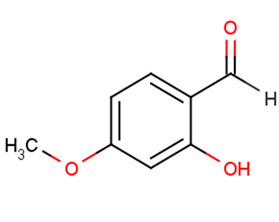
4-Methoxysalicylaldehyde
CAS No. 673-22-3
4-Methoxysalicylaldehyde( —— )
Catalog No. M18979 CAS No. 673-22-3
4-Methoxysalicylaldehyde, a naturally occurring product, has a range of industrial applications in the preparation of organic compounds, drugs and therapeutic agents.
Purity : >98% (HPLC)
 COA
Datasheet
HNMR
HPLC
MSDS
Handing Instructions
COA
Datasheet
HNMR
HPLC
MSDS
Handing Instructions
| Size | Price / USD | Stock | Quantity |
| 100MG | Get Quote | In Stock |


|
| 200MG | Get Quote | In Stock |
|
| 500MG | Get Quote | In Stock |
|
| 1G | 27 | In Stock |
|
Biological Information
-
Product Name4-Methoxysalicylaldehyde
-
NoteResearch use only, not for human use.
-
Brief Description4-Methoxysalicylaldehyde, a naturally occurring product, has a range of industrial applications in the preparation of organic compounds, drugs and therapeutic agents.
-
Description4-Methoxysalicylaldehyde, a naturally occurring product, has a range of industrial applications in the preparation of organic compounds, drugs and therapeutic agents.
-
In Vitro——
-
In Vivo——
-
Synonyms——
-
PathwayApoptosis
-
TargetTNF
-
RecptorOthers
-
Research Area——
-
Indication——
Chemical Information
-
CAS Number673-22-3
-
Formula Weight152.14
-
Molecular FormulaC8H8O3
-
Purity>98% (HPLC)
-
SolubilityDMSO : ≥ 50 mg/mL 328.62 mM H2O : 2 mg/mL 13.14 mM
-
SMILESCOC1=CC(=C(C=C1)C=O)O
-
Chemical Name——
Shipping & Storage Information
-
Storage(-20℃)
-
ShippingWith Ice Pack
-
Stability≥ 2 years
Reference
molnova catalog



related products
-
MALTOTETRAOSE
MALTOTETRAOSE are potent inhibitors of TNF-α-induced intercellular adhesion molecule-1 (ICAM-1) expression maltotetraose may be beneficial in the suppression of early atherosclerosis development.
-
Lenalidomide
Lenalidomide (initially known as CC-5013 and marketed as Revlimid? by Celgene) is a derivative of thalidomide introduced in 2004.
-
Aflatoxin G1
Aflatoxin G1 is one type of aflatoxins occuring in nature. It is produced by molds, such as Aspergillus flavus and Aspergillus parasiticus. Aflatoxins are hepatogenic, teratogenic, imunosuppressive, and carcinogenic fungal metabolites found in feeds, nuts, wine-grapes, spices, and other grain crops.
