


 Cart
Cart
 sales@molnova.com



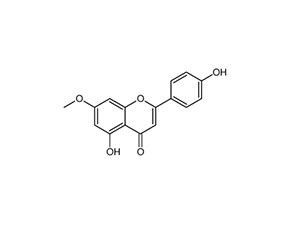
Genkwanin
CAS No. 437-64-9
Genkwanin( Puddumetin )
Catalog No. M18551 CAS No. 437-64-9
Genkwanin exerts its anti-inflammatory effect mainly through the regulation of the miR-11/MKP-1/MAPK pathway.
Purity : >98% (HPLC)
 COA
Datasheet
HNMR
HPLC
MSDS
Handing Instructions
COA
Datasheet
HNMR
HPLC
MSDS
Handing Instructions
| Size | Price / USD | Stock | Quantity |
| 25MG | 49 | In Stock |


|
| 50MG | 79 | In Stock |
|
| 100MG | 129 | In Stock |
|
| 200MG | Get Quote | In Stock |
|
| 500MG | Get Quote | In Stock |
|
| 1G | Get Quote | In Stock |
|
Biological Information
-
Product NameGenkwanin
-
NoteResearch use only, not for human use.
-
Brief DescriptionGenkwanin exerts its anti-inflammatory effect mainly through the regulation of the miR-11/MKP-1/MAPK pathway.
-
DescriptionGenkwanin exerts its anti-inflammatory effect mainly through the regulation of the miR-11/MKP-1/MAPK pathway. Genkwanin is transported by both passive diffusion and multidrug resistance protein (MDR)-mediated efflux mechanisms.
-
In Vitro——
-
In Vivo——
-
SynonymsPuddumetin
-
PathwayTyrosine Kinase
-
TargetSrc
-
RecptorOthers
-
Research AreaOthers-Field
-
Indication——
Chemical Information
-
CAS Number437-64-9
-
Formula Weight284.26
-
Molecular FormulaC16H12O5
-
Purity>98% (HPLC)
-
SolubilityDMSO : 5 mg/mL 17.59 mM; H2O : < 0.1 mg/mL
-
SMILESCOC1=CC(=C2C(=C1)OC(=CC2=O)C3=CC=C(C=C3)O)O
-
Chemical Name——
Shipping & Storage Information
-
Storage(-20℃)
-
ShippingWith Ice Pack
-
Stability≥ 2 years
Reference
molnova catalog



related products
-
N-Acetyl-O-phosphono...
Phosphopeptide ligand for the src SH2 domain (IC50 = 1 μM). Blocks src interactions with EGFR and FAK.
-
1-Naphthyl PP1
1-Naphthyl PP1 is a selective src inhibitor(v-Src and c-Fyn, c-Abl, CDK2 and CAMK II with IC50s of 1.0, 0.6, 0.6, 18 and 22 μM, respectively)
-
Neochlorogenic acid
Chlorogenic acid has resistance to the brown rot fungus, may by interfering with fungal melanin production.
