


 Cart
Cart
 sales@molnova.com



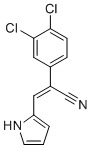
ANI-7
CAS No. 931417-26-4
ANI-7( ANI 7 | ANI7 )
Catalog No. M16667 CAS No. 931417-26-4
A potent and selective (up to 263-fold) inhibitor of breast cancer cells with GI50 of 0.5 uM (MCF-7), via activation the aryl hydrocarbon receptor (AhR) pathway.
Purity : >98% (HPLC)
 COA
Datasheet
HNMR
HPLC
MSDS
Handing Instructions
COA
Datasheet
HNMR
HPLC
MSDS
Handing Instructions
| Size | Price / USD | Stock | Quantity |
| 1 mL x 10 mM in DMSO | 28 | In Stock |


|
| 5MG | 32 | In Stock |
|
| 10MG | 56 | In Stock |
|
| 25MG | 107 | In Stock |
|
| 50MG | 164 | In Stock |
|
| 100MG | 230 | In Stock |
|
| 200MG | 341 | In Stock |
|
| 500MG | Get Quote | In Stock |
|
| 1G | Get Quote | In Stock |
|
Biological Information
-
Product NameANI-7
-
NoteResearch use only, not for human use.
-
Brief DescriptionA potent and selective (up to 263-fold) inhibitor of breast cancer cells with GI50 of 0.5 uM (MCF-7), via activation the aryl hydrocarbon receptor (AhR) pathway.
-
DescriptionA potent and selective (up to 263-fold) inhibitor of breast cancer cells with GI50 of 0.5 uM (MCF-7), via activation the aryl hydrocarbon receptor (AhR) pathway; inhibits other cell lines derived from other tumour types with GI50 of 3.2-46 uM (lung, colon, ovary, neuronal, glial, prostate, and pancreas); potently inhibits the growth of T47D, ZR-75-1, MCF-7, SKBR3, and MDA-MB-468 breast cancer cells with GI50 of 0.16-0.38 uM, induces cell cycle arrest checkpoint activation and DNA damage; binds to the AhR, induces translocation to the nucleus, activates the XRE, induces CYP1 activity, culminating in cell cycle arrest, checkpoint activation, DNA damage and cell death.
-
In VitroANI-7 (2.5 μM; 24 hours; MCF10A and MDA-MB-468 cells) treatment induces significant S-phase and G2 + M-phase cell cycle arrest within 24 hours of treatment in MDA-MB-468 cells, and negligible effect in normal breast MCF10A cells.ANI-7 (2 μM; 12-24 hours; MDA-MB-468 cells) treatment results in a significant increase in the content and phosphorylation of CHK2, and induces a significant increase in H2AX? in MDA-MB-468 cells, indicative of DNA double-strand damage.Inhibition of the AhR pathway ameliorates the effects of ANI-7. ANI-7 activates XRE activity and expression of the AhR and CYP1 members.Comparisons of the GI50 values show that ANI-7 produces a GI50 value of 0.38 μM in MCF-7 cells, whereas values of 3.0-42 μM are observed in cell lines from lung, colon, ovary, neuronal, glial, prostate, and pancreas. The only other tumor type that shows appreciable growth inhibition by ANI-7 is the A431 vulva cell line (GI50 of 0.51μM).ANI-7 potently inhibits the growth of T47D, ZR-75-1, MCF-7, SKBR3, and MDA-MB-468 breast cancer cells (GI50 range of 0.16-0.38 μM), moderately inhibits the growth of BT20 and BT474 cells (GI50 range of 1-2 μM), and essentially fails to inhibit the growth of MDA-MB-231 and MCF10A cells (GI50 range of 17-26 μM). Moreover, ANI-7 maintained its ability to inhibit the growth of drug-resistant cells (MCF-7/VP16: GI50 of 0.21 μM). Cell Cycle Analysis Cell Line:MCF10A and MDA-MB-468 cells Concentration:2.5 μM Incubation Time:24 hours Result:Induced significant S-phase and G2 + M-phase cell cycle arrest in MDA-MB-468 cells, and negligible effect in normal breast MCF10A cells.Western Blot Analysis Cell Line:MDA-MB-468 cells Concentration:2 μM Incubation Time:12 hours, 24 hours Result:Resulted in a significant increase in the content and phosphorylation of CHK2 (25-fold increase),and induced a significant increase in H2AX? (3.5-fold increase).
-
In Vivo——
-
SynonymsANI 7 | ANI7
-
PathwayEndocrinology/Hormones
-
TargetAhR
-
RecptorAhR
-
Research Area——
-
Indication——
Chemical Information
-
CAS Number931417-26-4
-
Formula Weight263.121
-
Molecular FormulaC13H8Cl2N2
-
Purity>98% (HPLC)
-
SolubilityIn Vitro:?DMSO : 20.83 mg/mL (79.17 mM)
-
SMILES——
-
Chemical Name(Z)-2-(3,4-dichlorophenyl)-3-(1H-pyrrol-2-yl)acrylonitrile
Shipping & Storage Information
-
Storage(-20℃)
-
ShippingWith Ice Pack
-
Stability≥ 2 years
Reference
1. Gilbert J, et al. Mol Pharmacol. 2017 Dec 21. pii: mol.117.109827.
molnova catalog



related products
-
3-Methylindole
Skatole is produced by intestinal bacteria regulates intestinal epithelial cellular functions through activating aryl hydrocarbon receptors and p38.
-
Mexiletine hydrochlo...
Antiarrhythmic agent pharmacologically similar to LIDOCAINE. It may have some anticonvulsant properties.
-
VAF347
VAF347 is a cell-permeable and highly affinity agonist of the aryl hydrocarbon receptor (AhR) with anti-inflammatory effects.
