


 Cart
Cart
 sales@molnova.com



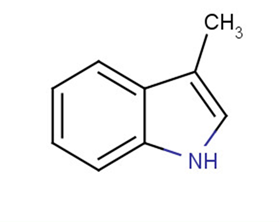
3-Methylindole
CAS No. 83-34-1
3-Methylindole( 3-Methyl-1H-indole | 3-?Methylindole | Skatole | Scatole | beta-Methylindole )
Catalog No. M20007 CAS No. 83-34-1
Skatole is produced by intestinal bacteria regulates intestinal epithelial cellular functions through activating aryl hydrocarbon receptors and p38.
Purity : >98% (HPLC)
 COA
Datasheet
HNMR
HPLC
MSDS
Handing Instructions
COA
Datasheet
HNMR
HPLC
MSDS
Handing Instructions
| Size | Price / USD | Stock | Quantity |
| 1 mL x 10 mM in DMSO | 28 | In Stock |


|
| 100MG | 37 | In Stock |
|
| 200MG | Get Quote | In Stock |
|
| 500MG | Get Quote | In Stock |
|
| 1G | Get Quote | In Stock |
|
Biological Information
-
Product Name3-Methylindole
-
NoteResearch use only, not for human use.
-
Brief DescriptionSkatole is produced by intestinal bacteria regulates intestinal epithelial cellular functions through activating aryl hydrocarbon receptors and p38.
-
DescriptionSkatole is produced by intestinal bacteria regulates intestinal epithelial cellular functions through activating aryl hydrocarbon receptors and p38.
-
In Vitro——
-
In Vivo——
-
Synonyms3-Methyl-1H-indole | 3-?Methylindole | Skatole | Scatole | beta-Methylindole
-
PathwayEndocrinology/Hormones
-
TargetAhR
-
RecptorAhR
-
Research Area——
-
Indication——
Chemical Information
-
CAS Number83-34-1
-
Formula Weight131.17
-
Molecular FormulaC9H9N
-
Purity>98% (HPLC)
-
SolubilityDMSO:198.2 mM
-
SMILESCc1c[nH]c2ccccc12
-
Chemical Name——
Shipping & Storage Information
-
Storage(-20℃)
-
ShippingWith Ice Pack
-
Stability≥ 2 years
Reference
1.Whitehead TR et al. Catabolic pathway for the production of skatole and indoleacetic acid by the acetogen Clostridium drakei Clostridium scatologenes and swine manure. Appl Environ Microbiol. 2008 Mar;74(6):1950-3.
molnova catalog



related products
-
UM729
UM729 is an enhancer of aryl hydrocarbon receptor (AhR) antagonists.
-
5F 203
A potent, selective antitumour agent through activation the aryl hydrocarbon receptor (AhR) pathway.
-
Mexiletine hydrochlo...
Antiarrhythmic agent pharmacologically similar to LIDOCAINE. It may have some anticonvulsant properties.
