


 Cart
Cart
 sales@molnova.com



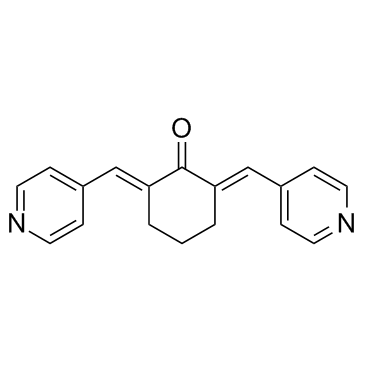
SC-66
CAS No. 871361-88-5
SC-66( SC66 | SC 66 )
Catalog No. M16333 CAS No. 871361-88-5
SC66 is an allosteric Akt inhibitor.
Purity : >98% (HPLC)
 COA
Datasheet
HNMR
HPLC
MSDS
Handing Instructions
COA
Datasheet
HNMR
HPLC
MSDS
Handing Instructions
| Size | Price / USD | Stock | Quantity |
| 5MG | 38 | In Stock |


|
| 10MG | 53 | In Stock |
|
| 25MG | 92 | In Stock |
|
| 50MG | 141 | In Stock |
|
| 100MG | 206 | In Stock |
|
| 200MG | Get Quote | In Stock |
|
| 500MG | 513 | In Stock |
|
| 1G | Get Quote | In Stock |
|
Biological Information
-
Product NameSC-66
-
NoteResearch use only, not for human use.
-
Brief DescriptionSC66 is an allosteric Akt inhibitor.
-
DescriptionSC66 is an allosteric Akt inhibitor; exhibits a dual inhibitory activity that directly interferes with the PH domain binding to PIP3 and facilitates Akt ubiquitination; has anticancer activity mouse xenograft tumor model.
-
In Vitro——
-
In Vivo——
-
SynonymsSC66 | SC 66
-
PathwayCytoskeleton/Cell Adhesion Molecules
-
TargetAkt
-
RecptorAkt
-
Research AreaCancer
-
Indication——
Chemical Information
-
CAS Number871361-88-5
-
Formula Weight276.3324
-
Molecular FormulaC18H16N2O
-
Purity>98% (HPLC)
-
SolubilityDMSO: ≥ 34 mg/mL
-
SMILESO=C1/C(CCC/C1=C\C2=CC=NC=C2)=C/C3=CC=NC=C3
-
Chemical NameCyclohexanone, 2,6-bis(4-pyridinylmethylene)-, (2E,6E)-
Shipping & Storage Information
-
Storage(-20℃)
-
ShippingWith Ice Pack
-
Stability≥ 2 years
Reference
1. Jo H, et al. Proc Natl Acad Sci U S A. 2011 Apr 19;108(16):6486-91.
2. Cusimano A, et al. Oncotarget. 2015 Jan 30;6(3):1707-22.
molnova catalog



related products
-
AKT-IN-6
AKT-IN-6 (INCB-047775) has an inhibitory effect on ATK. Akt is an important component of cellular signaling for growth factors, cytokines, and other cell stimuli.
-
Borussertib
Borussertib is a potent, first-in-class, covalent-allosteric AKT inhibitor.
-
(E)-Akt inhibitor-IV
(E)-Akt inhibitor-IV? ((E)-AKTIV) is an inhibitor of PI3K-Akt.
