


 Cart
Cart
 sales@molnova.com



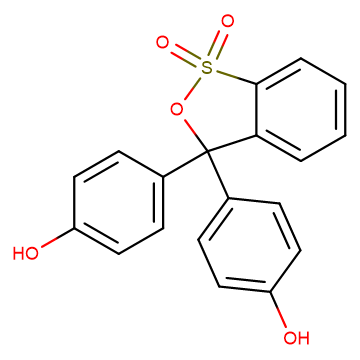
Phenol Red
CAS No. 143-74-8
Phenol Red( —— )
Catalog No. M11858 CAS No. 143-74-8
Red dye, pH indicator, and diagnostic aid for determination of renal function. It is used also for studies of the gastrointestinal and other systems.
Purity : >98% (HPLC)
 COA
Datasheet
HNMR
HPLC
MSDS
Handing Instructions
COA
Datasheet
HNMR
HPLC
MSDS
Handing Instructions
| Size | Price / USD | Stock | Quantity |
| 1 mL x 10 mM in DMSO | 29 | In Stock |


|
| 100MG | Get Quote | In Stock |
|
| 200MG | Get Quote | In Stock |
|
| 500MG | Get Quote | In Stock |
|
| 1G | 27 | In Stock |
|
Biological Information
-
Product NamePhenol Red
-
NoteResearch use only, not for human use.
-
Brief DescriptionRed dye, pH indicator, and diagnostic aid for determination of renal function. It is used also for studies of the gastrointestinal and other systems.
-
DescriptionRed dye, pH indicator, and diagnostic aid for determination of renal function. It is used also for studies of the gastrointestinal and other systems.
-
In VitroPhenol red (PR) is the standard pH indicator in various cell and tissue culture media, as it provides a quick check for the health of the culture. Phenol red has also been used in multiple protocols to detect cellular hydrogen peroxide as well as peroxidase activity from human peroxidase enzymes.
-
In Vivo——
-
Synonyms——
-
PathwayOthers
-
TargetOther Targets
-
RecptorOthers
-
Research Area——
-
Indication——
Chemical Information
-
CAS Number143-74-8
-
Formula Weight354.38
-
Molecular FormulaC19H14O5S
-
Purity>98% (HPLC)
-
SolubilityDMSO: 10 mM
-
SMILESOC1=CC=C(C=C1)C1(OS(=O)(=O)C2=CC=CC=C12)C1=CC=C(O)C=C1
-
Chemical Name——
Shipping & Storage Information
-
Storage(-20℃)
-
ShippingWith Ice Pack
-
Stability≥ 2 years
Reference
1.Tamura, Z. Yakugaku Zasshi (in Japanese), 1997, 117 (10–11): 764–770.
molnova catalog



related products
-
MRS 2578
MRS2578, an effective P2Y6 receptor antagonist with IC50 of 37 nM, shows insignificant inhibition at P2Y1, P2Y2, P2Y4, and P2Y11 receptors.
-
[Phe17] - Apelin 17
[Phe17] - Apelin 17
-
Glycyl-glycine
Glycylglycine (Gly-Gly) is a dipeptide used in biochemical research. It is the simplest of all dipeptides and is used as a starting template for preparation of more complex peptides. Glycine is involved in the body's production of DNA phospholipids and collagen and in the release of energy.
