


 Cart
Cart
 sales@molnova.com



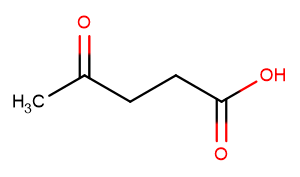
Levulinic acid
CAS No. 123-76-2
Levulinic acid( 4-Oxovaleric acid | Laevulinic acid | β-Acetylpropionic acid )
Catalog No. M20243 CAS No. 123-76-2
Levulinic acid derived from the degradation of cellulose is a precursor for the synthesis of biofuels such as ethyl levulinate.
Purity : >98% (HPLC)
 COA
Datasheet
HNMR
HPLC
MSDS
Handing Instructions
COA
Datasheet
HNMR
HPLC
MSDS
Handing Instructions
| Size | Price / USD | Stock | Quantity |
| 1 mL x 10 mM in DMSO | 28 | In Stock |


|
| 100MG | Get Quote | In Stock |
|
| 200MG | Get Quote | In Stock |
|
| 500MG | 33 | In Stock |
|
| 1G | Get Quote | In Stock |
|
Biological Information
-
Product NameLevulinic acid
-
NoteResearch use only, not for human use.
-
Brief DescriptionLevulinic acid derived from the degradation of cellulose is a precursor for the synthesis of biofuels such as ethyl levulinate.
-
DescriptionLevulinic acid derived from the degradation of cellulose is a precursor for the synthesis of biofuels such as ethyl levulinate.
-
In Vitro——
-
In Vivo——
-
Synonyms4-Oxovaleric acid | Laevulinic acid | β-Acetylpropionic acid
-
PathwayOthers
-
TargetOther Targets
-
RecptorOthers
-
Research AreaCancer
-
IndicationTransitional Cell Carcinoma of the Bladder
Chemical Information
-
CAS Number123-76-2
-
Formula Weight116.12
-
Molecular FormulaC5H8O3
-
Purity>98% (HPLC)
-
SolubilityWater: 100 mg/mL;DMSO: Soluble
-
SMILESCC(=O)CCC(O)=O
-
Chemical Name——
Shipping & Storage Information
-
Storage(-20℃)
-
ShippingWith Ice Pack
-
Stability≥ 2 years
Reference
molnova catalog



related products
-
Pafenolol
Pafenolol is a P-glycoprotein modulator with a Ki value of 5.5 μM. pafenolol is an orally available and selective beta-adrenergic receptor antagonist.
-
Valnoctamide
Valnoctamide (Valmethamide) has antiepileptic and anticonvulsant activity and can be used in the study of neurological disorders.
-
Hirudin (55-65) (sul...
Hirudin (55-65) (sulfated) is a fragment of Hirudin with anticoagulant effects. Hirudin is a thrombin inhibitor with blood anticoagulant property.
