


 Cart
 sales@molnova.com




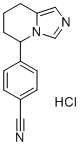
Fadrozole hydrochloride
CAS No. 102676-31-3
Fadrozole hydrochloride( CGS 16949A | FAD286 | FAD 286 )
Catalog No. M10128 CAS No. 102676-31-3
A potent and selective, orally bioavailable aromatase inhibitor with IC50 of 1.7 nM.
Purity : >98% (HPLC)
 COA
Datasheet
HNMR
HPLC
MSDS
Handing Instructions
| Size | Price / USD | Stock | Quantity |
| 1 mL x 10 mM in DMSO | 42 | In Stock |


|
| 5MG | 38 | In Stock |
|
| 10MG | 61 | In Stock |
|
| 25MG | 122 | In Stock |
|
| 50MG | 198 | In Stock |
|
| 100MG | 346 | In Stock |
|
| 200MG | Get Quote | In Stock |
|
| 500MG | Get Quote | In Stock |
|
| 1G | Get Quote | In Stock |
|
Biological Information
-
Product NameFadrozole hydrochloride
-
NoteResearch use only, not for human use.
-
Brief DescriptionA potent and selective, orally bioavailable aromatase inhibitor with IC50 of 1.7 nM.
-
DescriptionA potent and selective, orally bioavailable aromatase inhibitor with IC50 of 1.7 nM, 180 times more potent than aminoglutethimide; lowers ovarian estrogen synthesis by gonadotropin-primed, androstenedione treated mice, suppresses hormone-dependent and -independent tumors in vivo.Breast Cancer Approved(In Vitro):Fadrozole hydrochloride is a potent, selective and nonsteroidal inhibitor of aromatase with an IC50 of 6.4 nM. In hamster ovarian slices, Fadrozole hydrochloride inhibits the production of estrogen with an IC50 of 0.03 μM. The production of progesterone is inhibited with an IC50 of 120 μM. Synthesis of other cytochrome P-450 dependent steroids can be suppressed to various degrees with higher doses of Fadrozole hydrochloride. (In Vivo):Fadrozole hydrochloride is able to inhibit the aromatase-mediated uterine hypertrophy in immature female rats with an ED50 of 0.03 mg/kg when given orally. In the same model, aminoglutethimide elicits the same effect with an ED50 of 30 mg/kg when given orally.Fadrozole hydrochloride prevents the development of both benign and malignant spontaneus mammary neoplasns in female Sprague-Dawley rats. It also slows the spontaneous development of ptuitary pars distalis adenomas in female rats, and reduces the incidence of spontaneous hepatocellular tumours in male and female rats.Administration of Fadrozole hydrochloride in male and female mice accompanies with a 70% reduction in parasite burden. This protective effect is associated in male mice with a recovery of the specific cellular immune response. Interleukin-6 (IL-6) serum levels, and its production by splenocytes, is augmented by 80%, together with a 10-fold increase in its expression in testes of infected male mice. Fadrozole hydrochloride treatment returns these levels to baseline values.
-
In VitroFadrozole hydrochloride is a potent, selective and nonsteroidal inhibitor of aromatase with an IC50 of 6.4 nM. In hamster ovarian slices, Fadrozole hydrochloride inhibits the production of estrogen with an IC50 of 0.03 μM. The production of progesterone is inhibited with an IC50 of 120 μM. Synthesis of other cytochrome P-450 dependent steroids can be suppressed to various degrees with higher doses of Fadrozole hydrochloride.
-
In VivoFadrozole hydrochloride is able to inhibit the aromatase-mediated uterine hypertrophy in immature female rats with an ED50 of 0.03 mg/kg when given orally. In the same model, aminoglutethimide elicits the same effect with an ED50 of 30 mg/kg when given orally. Fadrozole hydrochloride prevents the development of both benign and malignant spontaneus mammary neoplasns in female Sprague-Dawley rats. It also slows the spontaneous development of ptuitary pars distalis adenomas in female rats, and reduces the incidence of spontaneous hepatocellular tumours in male and female rats. Administration of Fadrozole hydrochloride in male and female mice accompanies with a 70% reduction in parasite burden. This protective effect is associated in male mice with a recovery of the specific cellular immune response. Interleukin-6 (IL-6) serum levels, and its production by splenocytes, is augmented by 80%, together with a 10-fold increase in its expression in testes of infected male mice. Fadrozole hydrochloride treatment returns these levels to baseline values.
-
SynonymsCGS 16949A | FAD286 | FAD 286
-
PathwayMetabolic Enzyme/Protease
-
TargetCYPs
-
RecptorCYPs
-
Research AreaCancer
-
IndicationBreast Cancer
Chemical Information
-
CAS Number102676-31-3
-
Formula Weight259.737
-
Molecular FormulaC14H14ClN3
-
Purity>98% (HPLC)
-
SolubilityDMSO : 100 mg/mL 385.02 mM; H2O:100 mg/mL 385.02 mM;
-
SMILESC1CC(N2C=NC=C2C1)C3=CC=C(C=C3)C#N.Cl
-
Chemical Name4-(5,6,7,8-tetrahydroimidazo[1,5-a]pyridin-5-yl)benzonitrile hydrochloride
Shipping & Storage Information
-
Storage(-20℃)
-
ShippingWith Ice Pack
-
Stability≥ 2 years
Reference
1. Steele RE, et al. Steroids. 1987 Jul-Sep;50(1-3):147-61.
2. Schieweck K, et al. Cancer Res. 1988 Feb 15;48(4):834-8.
3. Juniewicz PE, et al. J Urol. 1988 Apr;139(4):827-31.
molnova catalog


related products
-
Methoxsalen
A potent tricyclic furocoumarin suicide that used to treat psoriasis, eczema, vitiligo and some cutaneous lymphomas in conjunction with exposing the skin to sunlight.
-
Borneol
Extracted from Cinnamomum cassia. It is a TRPM9 agonist that increases ocular surface wetness.
-
Cobicistat
A pharmacoenhancer that acts as potent and selective inhibitor of human CYP3A with IC50 of 30-285 nM.
