


 Cart
Cart
 sales@molnova.com



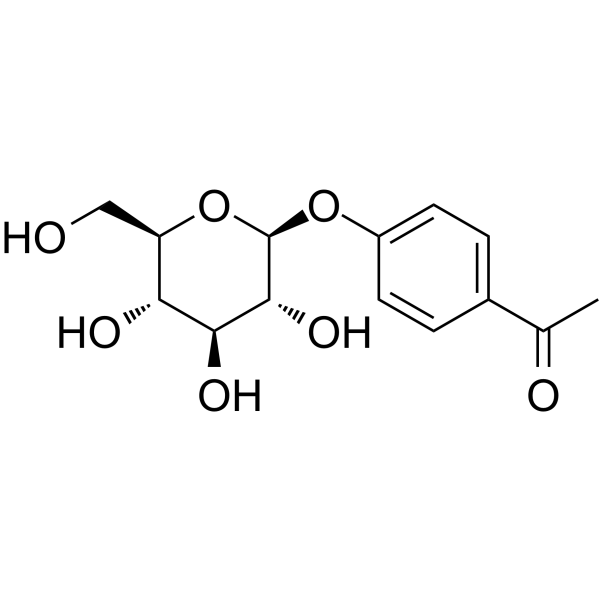
Picein
CAS No. 530-14-3
Picein( Ameliaroside | Salicinerein | Salinigrin | Piceoside )
Catalog No. M29334 CAS No. 530-14-3
Picein is derived from Picrorhiza kurroa and shows antioxidant properties.
Purity : >98% (HPLC)
 COA
Datasheet
HNMR
HPLC
MSDS
Handing Instructions
COA
Datasheet
HNMR
HPLC
MSDS
Handing Instructions
| Size | Price / USD | Stock | Quantity |
| 5MG | 93 | In Stock |


|
| 100MG | Get Quote | In Stock |
|
| 200MG | Get Quote | In Stock |
|
| 500MG | Get Quote | In Stock |
|
| 1G | Get Quote | In Stock |
|
Biological Information
-
Product NamePicein
-
NoteResearch use only, not for human use.
-
Brief DescriptionPicein is derived from Picrorhiza kurroa and shows antioxidant properties.
-
DescriptionPicein is derived from Picrorhiza kurroa and shows antioxidant properties.
-
In Vitro——
-
In Vivo——
-
SynonymsAmeliaroside | Salicinerein | Salinigrin | Piceoside
-
PathwayOthers
-
TargetAntioxidant
-
RecptorAntioxidant
-
Research Area——
-
Indication——
Chemical Information
-
CAS Number530-14-3
-
Formula Weight298.29
-
Molecular FormulaC14H18O7
-
Purity>98% (HPLC)
-
Solubility——
-
SMILESO([C@H]1[C@H](O)[C@@H](O)[C@H](O)[C@@H](CO)O1)C2=CC=C(C(C)=O)C=C2
-
Chemical Name——
Shipping & Storage Information
-
Storage(-20℃)
-
ShippingWith Ice Pack
-
Stability≥ 2 years
Reference
molnova catalog



related products
-
Dihydro-N-Caffeoylty...
Dihydro-N-Caffeoyltyramine is a compound extracted from Lycii Cortex that has antioxidant and antifungal activities and can be used to study fungal infections.
-
Oxysophoridine
Oxysophoridine has a protective effect on focal cerebral ischemic injury through antioxidant and anti-apoptotic mechanisms.
-
4-(Ethoxymethyl)phen...
4-(Ethoxymethyl)phenol (p-Hydroxybenzyl Et ether) is a small molecule extracted from Amburana cearensis, exhibiting cytotoxic and antioxidant activities.
