


 Cart
Cart
 sales@molnova.com



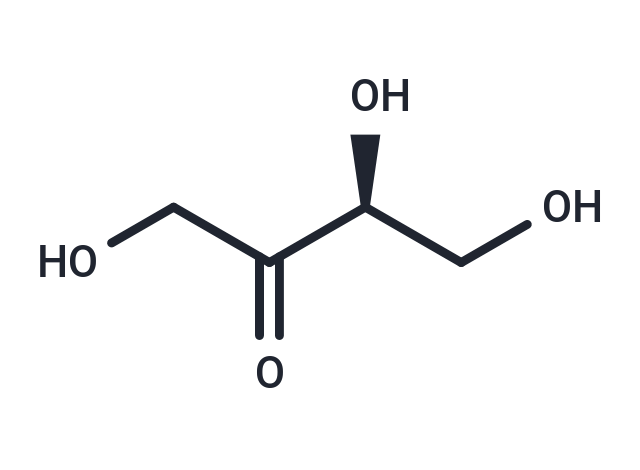
L-Erythrulose
CAS No. 533-50-6
L-Erythrulose( —— )
Catalog No. M37864 CAS No. 533-50-6
L-Erythrulose (L-glycero-Tetrulose) is a ketose extracted from sugar cane that has tanning and moisturizing effects and is often added to skin care products.
Purity : >98% (HPLC)
 COA
Datasheet
HNMR
HPLC
MSDS
Handing Instructions
COA
Datasheet
HNMR
HPLC
MSDS
Handing Instructions
| Size | Price / USD | Stock | Quantity |
| 5MG | 67 | In Stock |


|
| 10MG | 93 | In Stock |
|
| 25MG | 161 | In Stock |
|
| 50MG | 235 | In Stock |
|
| 100MG | 350 | In Stock |
|
| 200MG | Get Quote | In Stock |
|
| 500MG | 835 | In Stock |
|
| 1G | Get Quote | In Stock |
|
Biological Information
-
Product NameL-Erythrulose
-
NoteResearch use only, not for human use.
-
Brief DescriptionL-Erythrulose (L-glycero-Tetrulose) is a ketose extracted from sugar cane that has tanning and moisturizing effects and is often added to skin care products.
-
DescriptionL-Erythrulose (L-glycero-Tetrulose) is a ketose extracted from sugar cane that has tanning and moisturizing effects and is often added to skin care products.
-
In Vitro——
-
In Vivo——
-
Synonyms——
-
PathwayOthers
-
TargetOther Targets
-
RecptorOthers
-
Research Area——
-
Indication——
Chemical Information
-
CAS Number533-50-6
-
Formula Weight120.1
-
Molecular FormulaC4H8O4
-
Purity>98% (HPLC)
-
Solubility——
-
SMILES[C@@H](C(CO)=O)(CO)O
-
Chemical Name——
Shipping & Storage Information
-
Storage(-20℃)
-
ShippingWith Ice Pack
-
Stability≥ 2 years
Reference
molnova catalog



related products
-
GnRH-I
GnRH-I is a small 10 amino acid long peptide (decapeptide) from the hypothalamus,It is also known as luteinizing hormone releasing hormone (LHRH), is a key molecule in the regulation of reproduction in vertebrates. GnRH, a decapeptide, is produced by neurons in the medial basal hypothalamus (MBH) and secreted in a pulsatile manner into the cardiovascular system.
-
POPE
POPE is a compound found in Escherichia coli, part of the cell membrane, and can be used to study changes in cell membrane permeability.
-
p-Ethoxybenzoic acid
4-Ethoxybenzoic acid is a compound of luminescent bioapplication.
