


 Cart
Cart
 sales@molnova.com



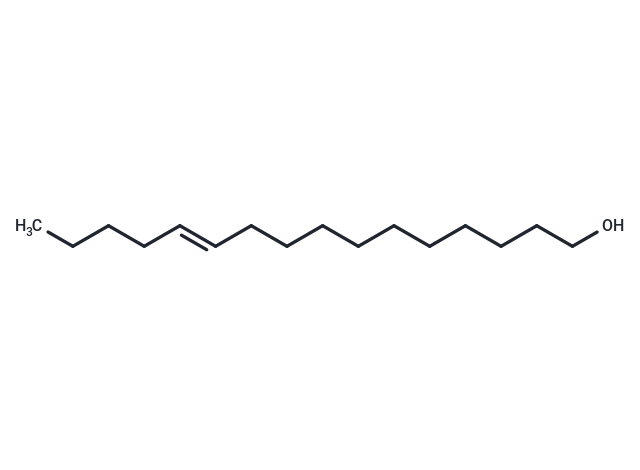
(E)-hexadec-11-en-1-ol
CAS No. 61301-56-2
(E)-hexadec-11-en-1-ol( —— )
Catalog No. M37461 CAS No. 61301-56-2
(E)-hexadec-11-en-1-ol ((E)-11-Hexadecenol) is the pheromone of the spotted stem borer Chilo partellus.
Purity : >98% (HPLC)
 COA
Datasheet
HNMR
HPLC
MSDS
Handing Instructions
COA
Datasheet
HNMR
HPLC
MSDS
Handing Instructions
| Size | Price / USD | Stock | Quantity |
| 5MG | 442 | In Stock |


|
| 10MG | 645 | In Stock |
|
| 25MG | 1017 | In Stock |
|
| 50MG | 1330 | In Stock |
|
| 100MG | 1795 | In Stock |
|
| 200MG | Get Quote | In Stock |
|
| 500MG | Get Quote | In Stock |
|
| 1G | Get Quote | In Stock |
|
Biological Information
-
Product Name(E)-hexadec-11-en-1-ol
-
NoteResearch use only, not for human use.
-
Brief Description(E)-hexadec-11-en-1-ol ((E)-11-Hexadecenol) is the pheromone of the spotted stem borer Chilo partellus.
-
Description(E)-hexadec-11-en-1-ol ((E)-11-Hexadecenol) is the pheromone of the spotted stem borer Chilo partellus. It is a long-chain fatty acid found in the volatile oil of Daphne genkwa and has potential antibacterial activity.
-
In Vitro——
-
In Vivo——
-
Synonyms——
-
PathwayGPCR/G Protein
-
TargetAntibacterial
-
RecptorAntibacterial
-
Research Area——
-
Indication——
Chemical Information
-
CAS Number61301-56-2
-
Formula Weight240.42
-
Molecular FormulaC16H32O
-
Purity>98% (HPLC)
-
Solubility——
-
SMILESC(CC/C=C/CCCC)CCCCCCCO
-
Chemical Name——
Shipping & Storage Information
-
Storage(-20℃)
-
ShippingWith Ice Pack
-
Stability≥ 2 years
Reference
molnova catalog



related products
-
Rifamycin S
Rifamycin S is a potent DNA-dependent RNA polymerase inhibitoris a quinone and an antibiotic agnet against Gram-positive bacteria.
-
Vinclozolin
Vinclozolin (Ornalin) is a fungicide with anti-androgenic activity and is commonly used in agriculture.
-
Benzoylacetone
Benzoylacetone exhibits antibacterial activity.
