


 Cart
Cart
 sales@molnova.com



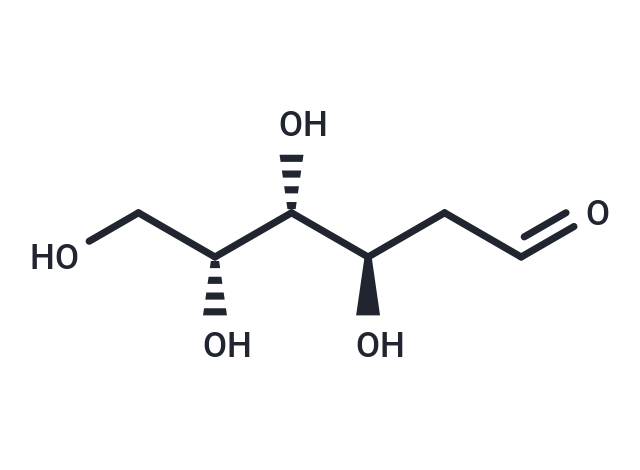
2-Deoxy-D-galactose
CAS No. 1949-89-9
2-Deoxy-D-galactose( —— )
Catalog No. M37322 CAS No. 1949-89-9
2-Deoxy-D-galactose is a glucose analog and glucose antagonist that inhibits the maintenance of hippocampal LTP and can suppress tumor growth by inhibiting the glycolytic process.
Purity : >98% (HPLC)
 COA
Datasheet
HNMR
HPLC
MSDS
Handing Instructions
COA
Datasheet
HNMR
HPLC
MSDS
Handing Instructions
| Size | Price / USD | Stock | Quantity |
| 100MG | 35 | In Stock |


|
| 200MG | Get Quote | In Stock |
|
| 500MG | 73 | In Stock |
|
| 1G | 108 | In Stock |
|
Biological Information
-
Product Name2-Deoxy-D-galactose
-
NoteResearch use only, not for human use.
-
Brief Description2-Deoxy-D-galactose is a glucose analog and glucose antagonist that inhibits the maintenance of hippocampal LTP and can suppress tumor growth by inhibiting the glycolytic process.
-
Description2-Deoxy-D-galactose is a glucose analog. 2-Deoxy-D-galactose inhibits glycolysis to inhibits tumor growth. 2-Deoxy-D-galactose is a substance interfering with the fucosylation of glycomacromolecules and impairing memory consolidation in various learning tasks. 2-Deoxy-d-galactose hinders glycoprotein fucosylation in vivo.
-
In Vitro2-Deoxy-D-galactose (1 mM/L; 5 h) is rapid phosphorylation during the first 30 min and decreases to approximately 20% of this rate during the subsequent hours in ascites hepatoma cells.
-
In Vivo2-Deoxy-D-galactose (380 mg/kg; i.p.; for 6 times) strongly decreases contents of UMP, UDPG, and UDP galactose in rat livers.2-Deoxy-D-galactose (2-8 μM; intracerebroventricularly injection; once) shows PAR impairment 30 min before the acquisition trial a dose of 4 μM and 15 min delay after do-gal administration.Animal Model:Male adult Wistar rats with passive avoidance response (PAR) acquisition trial Dosage:2, 4 and 8 μM Administration:Intracerebroventricularly injection; 2-8 μM; once Result:Exhibited PAR disruption at a dose of 4 μM.
-
Synonyms——
-
PathwayOthers
-
TargetOther Targets
-
RecptorOthers
-
Research Area——
-
Indication——
Chemical Information
-
CAS Number1949-89-9
-
Formula Weight164.16
-
Molecular FormulaC6H12O5
-
Purity>98% (HPLC)
-
SolubilityIn Vitro:?H2O : 250 mg/mL (1522.90 mM; Ultrasonic) Methanol : 125 mg/mL (761.45 mM; Ultrasonic)
-
SMILESOC[C@@H](O)[C@H](O)[C@H](O)CC=O
-
Chemical Name——
Shipping & Storage Information
-
Storage(-20℃)
-
ShippingWith Ice Pack
-
Stability≥ 2 years
Reference
1. Keppler DO, et al. The trapping of uridine phosphates by D-galactosamine. D-glucosamine, and 2-deoxy-D-galactose. A study on the mechanism of galactosamine hepatitis. Eur J Biochem. 1970 Dec;17(2):246-53.?
molnova catalog



related products
-
Somatostatin-14 (3-1...
Somatostatin-14 (3-10)
-
Beryllon II
Beryllon II is a widely used chromogenic reagent that is used to determine proteins and many elements, such as Mg, Mo, and Co.
-
Murracarpin
Murracarpin, showed vasorelaxing ,antinociceptive and anti-inflammatory activities.
