


 Cart
 sales@molnova.com




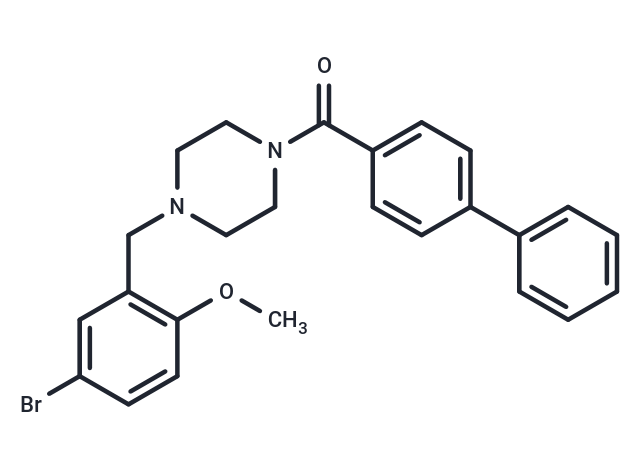
CCG-13514
CAS No. 423741-32-6
CCG-13514( —— )
Catalog No. M36999 CAS No. 423741-32-6
CCG-13514 is a biochemical reagent to be developed for biosynthesis.
Purity : >98% (HPLC)
 COA
Datasheet
HNMR
HPLC
MSDS
Handing Instructions
| Size | Price / USD | Stock | Quantity |
| 5MG | 331 | In Stock |


|
| 10MG | 451 | In Stock |
|
| 25MG | 634 | In Stock |
|
| 50MG | 825 | In Stock |
|
| 100MG | 1135 | In Stock |
|
| 200MG | 1516 | In Stock |
|
| 500MG | Get Quote | In Stock |
|
| 1G | Get Quote | In Stock |
|
Biological Information
-
Product NameCCG-13514
-
NoteResearch use only, not for human use.
-
Brief DescriptionCCG-13514 is a biochemical reagent to be developed for biosynthesis.
-
DescriptionCCG-13514 is a biochemical reagent to be developed for biosynthesis.
-
In Vitro——
-
In Vivo——
-
Synonyms——
-
PathwayOthers
-
TargetOther Targets
-
RecptorOthers
-
Research Area——
-
Indication——
Chemical Information
-
CAS Number423741-32-6
-
Formula Weight465.38
-
Molecular FormulaC25H25BrN2O2
-
Purity>98% (HPLC)
-
Solubility——
-
SMILESC(C1=C(OC)C=CC(Br)=C1)N2CCN(C(=O)C3=CC=C(C=C3)C4=CC=CC=C4)CC2
-
Chemical Name——
Shipping & Storage Information
-
Storage(-20℃)
-
ShippingWith Ice Pack
-
Stability≥ 2 years
Reference



-
(L)-Sodium lactate
Sodium L-lactate is produced from pyruvate by the enzyme Lactate Dehydrogenase. Lactate production occurs during anaerobic glycolysis or in proliferatively active cells. L-Lactic Acid occurs in small quantities in the blood and muscle fluid of man and animals.
-
D-(+)-ALLOSE
D-Allose is a rare naturally occurring monosaccharide known to exert anti-proliferative effects on cancer cells. The effects of D-Allose on the cellular membranes of hormone-refractory prostate cancer cell line (DU145) hormone-sensitive prostate cancer cell line (LNCaP) and normal prostate epithelial cells (PrEC) were studied at the molecular level by phospholipid profiling using a shotgun lipidomic method.
-
DSP-4 hydrochloride
DSP-4 hydrochloride (Neurotoxin DSP 4 hydrochloride) can be used for the temporary selective degradation of the central and peripheral noradrenergic neurons, mainly those from the locus coeruleus (LC).
