


 Cart
Cart
 sales@molnova.com



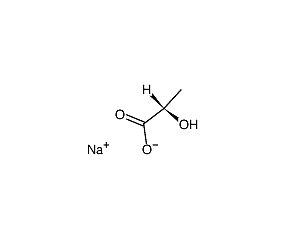
(L)-Sodium lactate
CAS No. 867-56-1
(L)-Sodium lactate( —— )
Catalog No. M19197 CAS No. 867-56-1
Sodium L-lactate is produced from pyruvate by the enzyme Lactate Dehydrogenase. Lactate production occurs during anaerobic glycolysis or in proliferatively active cells. L-Lactic Acid occurs in small quantities in the blood and muscle fluid of man and animals.
Purity : >98% (HPLC)
 COA
Datasheet
HNMR
HPLC
MSDS
Handing Instructions
COA
Datasheet
HNMR
HPLC
MSDS
Handing Instructions
| Size | Price / USD | Stock | Quantity |
| 1 mL x 10 mM in DMSO | 37 | In Stock |


|
| 25MG | 37 | In Stock |
|
| 50MG | 60 | In Stock |
|
| 100MG | 90 | In Stock |
|
| 200MG | 133 | In Stock |
|
| 500MG | 221 | In Stock |
|
| 1G | Get Quote | In Stock |
|
Biological Information
-
Product Name(L)-Sodium lactate
-
NoteResearch use only, not for human use.
-
Brief DescriptionSodium L-lactate is produced from pyruvate by the enzyme Lactate Dehydrogenase. Lactate production occurs during anaerobic glycolysis or in proliferatively active cells. L-Lactic Acid occurs in small quantities in the blood and muscle fluid of man and animals.
-
DescriptionSodium L-lactate is produced from pyruvate by the enzyme Lactate Dehydrogenase. Lactate production occurs during anaerobic glycolysis or in proliferatively active cells. L-Lactic Acid occurs in small quantities in the blood and muscle fluid of man and animals. The lactic acid concentration increases in muscle and blood after vigorous activity. L-Lactic acid is also present in liver, kidney, thymus gland, human amniotic fluid, and other organs and body fluids.
-
In Vitro——
-
In Vivo——
-
Synonyms——
-
PathwayOthers
-
TargetOther Targets
-
RecptorOthers
-
Research Area——
-
Indication——
Chemical Information
-
CAS Number867-56-1
-
Formula Weight112.06
-
Molecular FormulaC3H5NaO3
-
Purity>98% (HPLC)
-
SolubilityIn Vitro:?H2O : 250 mg/mL (2230.95 mM)
-
SMILES[Na+].C[C@H](O)C([O-])=O
-
Chemical Name——
Shipping & Storage Information
-
Storage(-20℃)
-
ShippingWith Ice Pack
-
Stability≥ 2 years
Reference
1. Martí I. et al. Acyclic Pseudopeptidic Hosts as Molecular Receptors and Transporters for Anions. Eur. J. Org. Chem. 2015, 2015 (23), 5150-5158.
molnova catalog



related products
-
Chrysophanol-8-O-bet...
Chrysophanol 8-O-β-D-(6’-O-galloyl)glucopyranoside, an anthraquinone glucoside, can be isolated from Rheum undulatum L. Chrysophanol 8-O-β-D-(6’-O-galloyl)glucopyranoside has potent DPPH radical and ?O2- scavenging activity.
-
[Phe1376] - Fibronec...
[Phe1376] - Fibronectin Fragment (1371 - 1382)
-
6-Bromoindole-3-carb...
6-Bromoindole-3-carboxylic acid is a marine derived natural products found in Pseudosuberites hyalinus.
