


 Cart
Cart
 sales@molnova.com



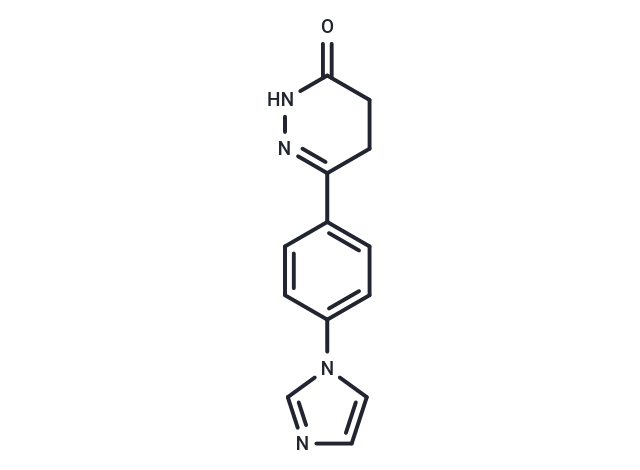
Imazodan
CAS No. 84243-58-3
Imazodan( —— )
Catalog No. M36381 CAS No. 84243-58-3
Imazodan, a small molecule compound with positive inotropic activity, is a selective type III phosphodiesterase inhibitor and can be used to study heart failure.
Purity : >98% (HPLC)
 COA
Datasheet
HNMR
HPLC
MSDS
Handing Instructions
COA
Datasheet
HNMR
HPLC
MSDS
Handing Instructions
| Size | Price / USD | Stock | Quantity |
| 5MG | 42 | In Stock |


|
| 10MG | 50 | In Stock |
|
| 25MG | 72 | In Stock |
|
| 50MG | 104 | In Stock |
|
| 100MG | Get Quote | In Stock |
|
| 200MG | Get Quote | In Stock |
|
| 500MG | Get Quote | In Stock |
|
| 1G | Get Quote | In Stock |
|
Biological Information
-
Product NameImazodan
-
NoteResearch use only, not for human use.
-
Brief DescriptionImazodan, a small molecule compound with positive inotropic activity, is a selective type III phosphodiesterase inhibitor and can be used to study heart failure.
-
DescriptionImazodan, a small molecule compound with positive inotropic activity, is a selective type III phosphodiesterase inhibitor and can be used to study heart failure.
-
In Vitro——
-
In Vivo——
-
Synonyms——
-
PathwayAngiogenesis
-
TargetPDE
-
RecptorPDE
-
Research Area——
-
Indication——
Chemical Information
-
CAS Number84243-58-3
-
Formula Weight240.26
-
Molecular FormulaC13H12N4O
-
Purity>98% (HPLC)
-
Solubility——
-
SMILESO=C1CCC(=NN1)c1ccc(cc1)-n1ccnc1
-
Chemical Name——
Shipping & Storage Information
-
Storage(-20℃)
-
ShippingWith Ice Pack
-
Stability≥ 2 years
Reference
molnova catalog



related products
-
Homo Sildenafil
Homo Sildenafil is an analog of Sildenafil, It acts as a phosphodiesterase inhibitor.
-
Avanafil
A potent and highly selective PDE5 inhibitor (IC50=5.2 nM) for erectile dysfunction.
-
Mirodenafil
Mirodenafil is a PDE-5 inhibitor developed for the treatment of erectile dysfunction.The pharmacoki-netics of mirodenafil were not significantly altered by this concurrent administration. Mirodenafil (50 or 100 mg), obviously improved erectile function and was well tolerated in a representative population of Korean men with broad-spectrum ED of various etiologies and severities.
