


 Cart
Cart
 sales@molnova.com



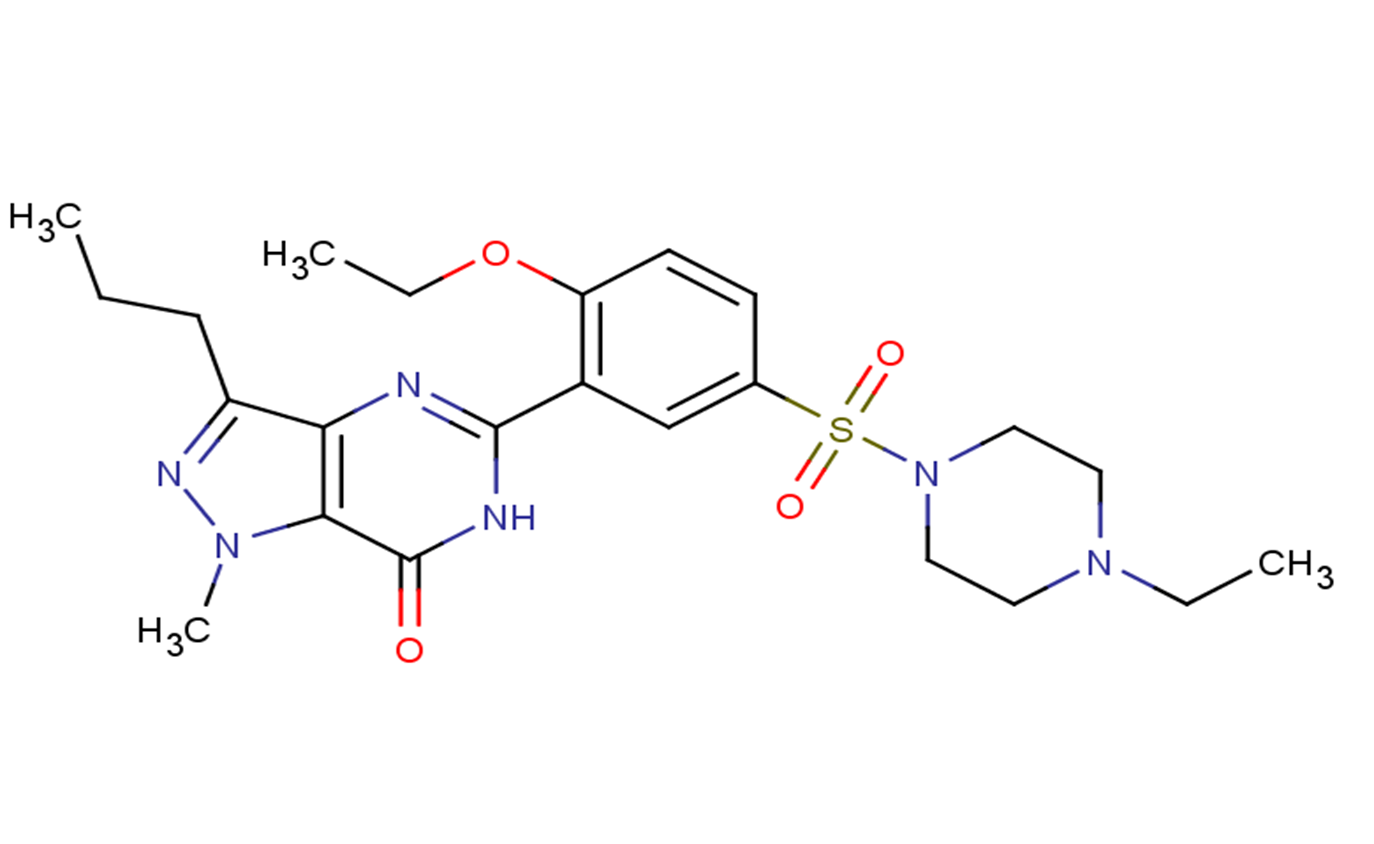
Homo Sildenafil
CAS No. 642928-07-2
Homo Sildenafil( —— )
Catalog No. M24657 CAS No. 642928-07-2
Homo Sildenafil is an analog of Sildenafil, It acts as a phosphodiesterase inhibitor.
Purity : >98% (HPLC)
 COA
Datasheet
HNMR
HPLC
MSDS
Handing Instructions
COA
Datasheet
HNMR
HPLC
MSDS
Handing Instructions
| Size | Price / USD | Stock | Quantity |
| 1 mL x 10 mM in DMSO | 67 | In Stock |


|
| 2MG | 33 | In Stock |
|
| 5MG | 55 | In Stock |
|
| 10MG | 88 | In Stock |
|
| 25MG | 187 | In Stock |
|
| 50MG | 275 | In Stock |
|
| 100MG | 384 | In Stock |
|
| 200MG | 541 | In Stock |
|
| 500MG | Get Quote | In Stock |
|
| 1G | Get Quote | In Stock |
|
Biological Information
-
Product NameHomo Sildenafil
-
NoteResearch use only, not for human use.
-
Brief DescriptionHomo Sildenafil is an analog of Sildenafil, It acts as a phosphodiesterase inhibitor.
-
DescriptionHomo Sildenafil is an analog of Sildenafil, It acts as a phosphodiesterase inhibitor.
-
In Vitro——
-
In Vivo——
-
Synonyms——
-
PathwayAngiogenesis
-
TargetPDE
-
Recptorphosphodiesterase
-
Research Area——
-
Indication——
Chemical Information
-
CAS Number642928-07-2
-
Formula Weight488.6
-
Molecular FormulaC23H32N6O4S
-
Purity>98% (HPLC)
-
SolubilityDMSO:10 mM
-
SMILESCCCC1=NN(C2=C1N=C(NC2=O)C3=C(C=CC(=C3)S(=O)(=O)N4CCN(CC4)CC)OCC)C
-
Chemical Name——
Shipping & Storage Information
-
Storage(-20℃)
-
ShippingWith Ice Pack
-
Stability≥ 2 years
Reference
1.Jackie D Corbin, et al. Vardenafil: Structural Basis for Higher Potency Over Sildenafil in Inhibiting cGMP-specific phosphodiesterase-5 (PDE5). Neurochem Int. 2004 Nov;45(6):859-63.
molnova catalog



related products
-
N-Methylbenzamide
N-Methylbenzamide is a potent phosphodiesterase 10A (PDE10A) inhibitor,with anti-cancer activity.
-
Darutigenol
Darutigenol has obvious antithrombotic effect, its mechanism may be related to inhibition of platelet aggregation and adhesion.
-
GSK-256066
A potent, selective PDE4 inhibitor with pIC50 of 11.5, 11.3, 11.4, and 11.9 for PDE4B, A, C, and D, respectively.
