


 Cart
Cart
 sales@molnova.com



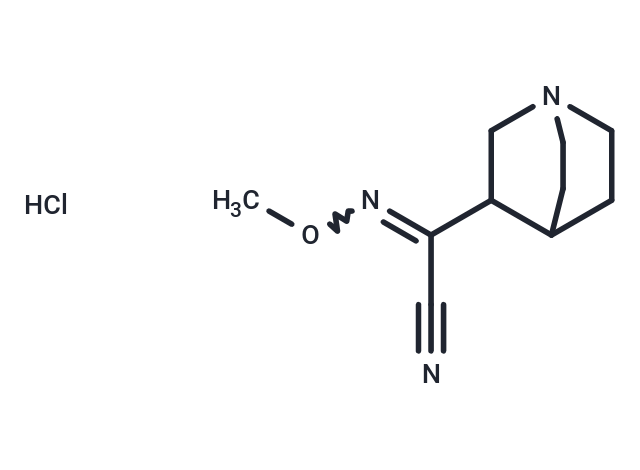
(Rac)-Sabcomeline HCl
CAS No. 133642-67-8
(Rac)-Sabcomeline HCl( —— )
Catalog No. M36219 CAS No. 133642-67-8
Sabcomeline HCl is an M1 receptor agonist that can be used to study Alzheimer's disease.
Purity : >98% (HPLC)
 COA
Datasheet
HNMR
HPLC
MSDS
Handing Instructions
COA
Datasheet
HNMR
HPLC
MSDS
Handing Instructions
| Size | Price / USD | Stock | Quantity |
| 5MG | 409 | In Stock |


|
| 10MG | 604 | In Stock |
|
| 25MG | 938 | In Stock |
|
| 50MG | 1265 | In Stock |
|
| 100MG | 1702 | In Stock |
|
| 200MG | Get Quote | In Stock |
|
| 500MG | Get Quote | In Stock |
|
| 1G | Get Quote | In Stock |
|
Biological Information
-
Product Name(Rac)-Sabcomeline HCl
-
NoteResearch use only, not for human use.
-
Brief DescriptionSabcomeline HCl is an M1 receptor agonist that can be used to study Alzheimer's disease.
-
DescriptionSabcomeline HCl is an M1 receptor agonist that can be used to study Alzheimer's disease.
-
In Vitro——
-
In Vivo——
-
Synonyms——
-
PathwayCell Cycle/DNA Damage
-
TargetAChR
-
RecptorAChR
-
Research Area——
-
Indication——
Chemical Information
-
CAS Number133642-67-8
-
Formula Weight229.71
-
Molecular FormulaC10H16ClN3O
-
Purity>98% (HPLC)
-
Solubility——
-
SMILESCl.N#CC(=NOC)C1CN2CCC1CC2
-
Chemical Name——
Shipping & Storage Information
-
Storage(-20℃)
-
ShippingWith Ice Pack
-
Stability≥ 2 years
Reference
molnova catalog



related products
-
8-Aminoadenine
8-Aminoadenine (7H-purine-6,8-diamine) is a ligand for Adenine Receptor with Ki of 0.0341 μM.
-
10-Gingerol
10-Gingerol-induced apoptosis was accompanied by phosphorylation of the mitogen-activated protein kinase (MAPKs) family, p38 MAPK (p38), c-Jun N-terminal kinase (JNK), and extracellular signal-regulated kinase (ERK).
-
Vesamicol hydrochlor...
Vesamicol hydrochloride ((±)-AH5183 hydrochloride) is a acetylcholine transport inhibitor.
