


 Cart
Cart
 sales@molnova.com



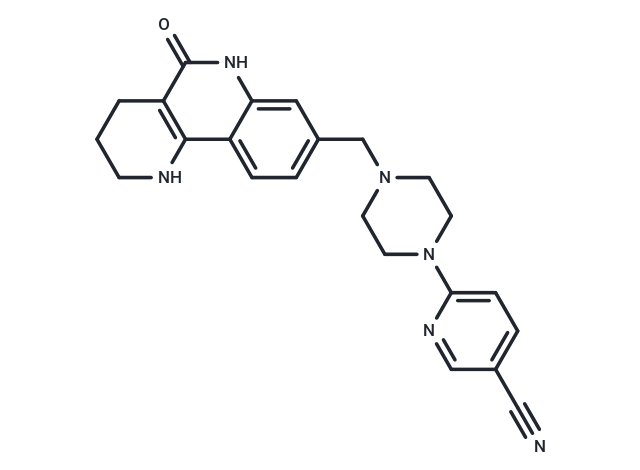
Nesuparib
CAS No. 2055357-64-5
Nesuparib( —— )
Catalog No. M35605 CAS No. 2055357-64-5
Nesuparib (JPI-547/OCN-201) is a potent PARP inhibitor with inhibitory effects on PARP and TNKS1.
Purity : >98% (HPLC)
 COA
Datasheet
HNMR
HPLC
MSDS
Handing Instructions
COA
Datasheet
HNMR
HPLC
MSDS
Handing Instructions
| Size | Price / USD | Stock | Quantity |
| 1 mL x 10 mM in DMSO | 233 | In Stock |


|
| 5MG | 211 | In Stock |
|
| 10MG | 337 | In Stock |
|
| 25MG | 605 | In Stock |
|
| 50MG | 807 | In Stock |
|
| 100MG | 1097 | In Stock |
|
| 200MG | Get Quote | In Stock |
|
| 500MG | Get Quote | In Stock |
|
| 1G | Get Quote | In Stock |
|
Biological Information
-
Product NameNesuparib
-
NoteResearch use only, not for human use.
-
Brief DescriptionNesuparib (JPI-547/OCN-201) is a potent PARP inhibitor with inhibitory effects on PARP and TNKS1.
-
DescriptionNesuparib is a potent inhibitor of PARP. Nesuparib is useful for the research of neuropathic pain, neurodegenerative disease, and cardiovascular disease (extracted from patent WO2016200101A2).
-
In Vitro——
-
In Vivo——
-
Synonyms——
-
PathwayWnt/Notch/Hedgehog
-
TargetWnt/beta/catenin
-
RecptorWnt/beta-catenin | PARP
-
Research Area——
-
Indication——
Chemical Information
-
CAS Number2055357-64-5
-
Formula Weight400.48
-
Molecular FormulaC23H24N6O
-
Purity>98% (HPLC)
-
SolubilityIn Vitro:?DMSO : ≥ 62.5 mg/mL (156.06 mM )
-
SMILESO=c1[nH]c2cc(CN3CCN(CC3)c3ccc(cn3)C#N)ccc2c2NCCCc12
-
Chemical Name——
Shipping & Storage Information
-
Storage(-20℃)
-
ShippingWith Ice Pack
-
Stability≥ 2 years
Reference
1. Tricyclic derivative compound, method for preparing same, and pharmaceutical composition comprising same. Patent WO2016200101A2.
molnova catalog



related products
-
Salinomycin
Salinomycin is an inhibitor of Wnt/β-catenin signaling, which acts on the Wnt/Fzd/LRP complex.
-
Zinc Orotate
Orotic acid zinc salt dihydrate is an intermediate product in pyrimidine synthesis.
-
KY-05009
KY-05009 pharmacologically inhibits TGF-β1-induced epithelial-to-mesenchymal transition (EMT) in human lung adenocarcinoma cells.
