


 Cart
Cart
 sales@molnova.com



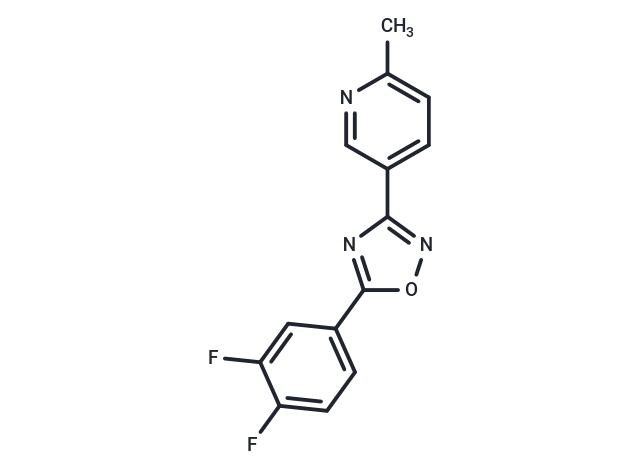
DDO-7263
CAS No. 2254004-96-9
DDO-7263( —— )
Catalog No. M35426 CAS No. 2254004-96-9
DDO-7263 is a 1,2,4-Oxadiazole derivative that upregulates Nrf2 through binding to Rpn6 to block the assembly of 26S proteasome and the subsequent degradation of ubiquitinated Nrf2.
Purity : >98% (HPLC)
 COA
Datasheet
HNMR
HPLC
MSDS
Handing Instructions
COA
Datasheet
HNMR
HPLC
MSDS
Handing Instructions
| Size | Price / USD | Stock | Quantity |
| 1 mL x 10 mM in DMSO | 93 | In Stock |


|
| 5MG | 93 | In Stock |
|
| 10MG | 147 | In Stock |
|
| 25MG | 246 | In Stock |
|
| 50MG | 323 | In Stock |
|
| 100MG | Get Quote | In Stock |
|
| 200MG | Get Quote | In Stock |
|
| 500MG | Get Quote | In Stock |
|
| 1G | Get Quote | In Stock |
|
Biological Information
-
Product NameDDO-7263
-
NoteResearch use only, not for human use.
-
Brief DescriptionDDO-7263 is a 1,2,4-Oxadiazole derivative that upregulates Nrf2 through binding to Rpn6 to block the assembly of 26S proteasome and the subsequent degradation of ubiquitinated Nrf2.
-
DescriptionDDO-7263, a 1,2,4-Oxadiazole derivative, is a potent Nrf2-ARE activator. DDO-7263 upregulates Nrf2 through binding to Rpn6 to block the assembly of 26S proteasome and the subsequent degradation of ubiquitinated Nrf2. DDO-7263 induces Nrf2 translocation into the nucleus. DDO-7263 inhibits of NLRP3 inflammasome activation. DDO-7263 exerts anti-inflammatory activity and has the potential for neurodegenerative diseases research, such as Parkinson's disease (PD).
-
In VitroWestern Blot AnalysisCell Line:PC12 cells Concentration:20 μM Incubation Time:2, 4, 8, 12, 24 hours Result:Upregulated the protein levels of HO-1 and NQO1 in concentration-dependent manners.
-
In VivoAnimal Model:Male C57BL/6 mice at 10 weeks of age and body weights of 22-26 gDosage:10, 50, 100 mg/kg Administration:IP; daily for 10 days Result:Improved the reduction of vertical spontaneous activity and mitigated the loss of balance coordination caused by MPTP (20 mg/kg/day; 7 days). Protected dopaminergic neurons from MPTP. Significantly downregulated the levels of pro-inflammatory factors, including IL-1β and TNF-α, in mouse plasma.Animal Model:SD rats Dosage:7, 35, 70 mg/kg (Pharmacokinetic Analysis) Administration:IP Result:Had a T1/2 of 3.32 hours and a Cmax of 1.38 mg/mL.
-
Synonyms——
-
PathwayNuclear Receptor/Transcription Factor
-
TargetKeap1-Nrf2
-
RecptorNrf2
-
Research Area——
-
Indication——
Chemical Information
-
CAS Number2254004-96-9
-
Formula Weight273.24
-
Molecular FormulaC14H9F2N3O
-
Purity>98% (HPLC)
-
SolubilityIn Vitro:?DMSO : 17.86 mg/mL (65.36 mM; Ultrasonic (<60°C)
-
SMILESCc1ccc(cn1)-c1noc(n1)-c1ccc(F)c(F)c1
-
Chemical Name——
Shipping & Storage Information
-
Storage(-20℃)
-
ShippingWith Ice Pack
-
Stability≥ 2 years
Reference
1. Li-Li Xu, et al. 5-(3,4-Difluorophenyl)-3-(6-methylpyridin-3-yl)-1,2,4-oxadiazole (DDO-7263), a novel Nrf2 activator targeting brain tissue, protects against MPTP-induced subacute Parkinson's disease in mice by inhibiting the NLRP3 inflammasome and protects PC12 cells against oxidative stress. Free Radic Biol Med. 2019 Apr;134:288-303.?
molnova catalog



related products
-
CBR-470-1
CBR-470-1 is a potent inhibitor of glycolytic phosphoglycerate kinase 1 (PGK1) that activates NRF2 by increasing methylglyoxal levels.
-
KI696
KI696 is a high-affinity probe that potently inhibits the interaction of Keap1 and NRF2.
-
KI696 isomer
KI696 isomer is an isomer of KI696, a low affinity probe for the study of immune and metabolic diseases.
