


 Cart
Cart
 sales@molnova.com



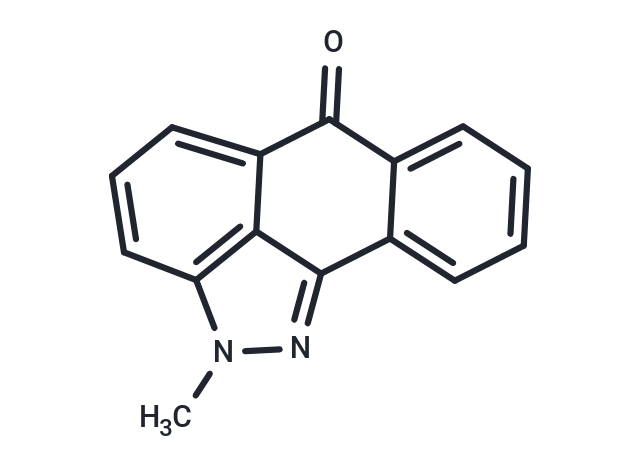
SP 600125, negative control
CAS No. 54642-23-8
SP 600125, negative control( —— )
Catalog No. M35021 CAS No. 54642-23-8
SP 600125, negative control is a methylated analog of SP 600125 and can be used as a negative control for SP 600125.
Purity : >98% (HPLC)
 COA
Datasheet
HNMR
HPLC
MSDS
Handing Instructions
COA
Datasheet
HNMR
HPLC
MSDS
Handing Instructions
| Size | Price / USD | Stock | Quantity |
| 10MG | 36 | In Stock |


|
| 25MG | 73 | In Stock |
|
| 50MG | 108 | In Stock |
|
| 100MG | 160 | In Stock |
|
| 200MG | Get Quote | In Stock |
|
| 500MG | 389 | In Stock |
|
| 1G | Get Quote | In Stock |
|
Biological Information
-
Product NameSP 600125, negative control
-
NoteResearch use only, not for human use.
-
Brief DescriptionSP 600125, negative control is a methylated analog of SP 600125 and can be used as a negative control for SP 600125.
-
DescriptionSP 600125, negative control (SPM1) is an alkyl derivative of pyrazoloanthrone, which can be used as a negative control for SP600125 (HY-12041).
-
In Vitro——
-
In Vivo——
-
Synonyms——
-
PathwayMAPK/ERK Signaling
-
TargetJNK
-
RecptorJNK
-
Research Area——
-
Indication——
Chemical Information
-
CAS Number54642-23-8
-
Formula Weight234.25
-
Molecular FormulaC15H10N2O
-
Purity>98% (HPLC)
-
SolubilityIn Vitro:?DMSO : 10 mg/mL (42.69 mM; Ultrasonic (<70°C)
-
SMILESO=C1C=2C=3C(C=4C1=CC=CC4)=NN(C)C3C=CC2
-
Chemical Name——
Shipping & Storage Information
-
Storage(-20℃)
-
ShippingWith Ice Pack
-
Stability≥ 2 years
Reference
1. Prasad KD, et al. Alkyl chain substituted 1,9-pyrazoloanthrones exhibit prominent inhibitory effect on c-Jun N-terminal kinase (JNK). Org Biomol Chem. 2014 Jul 14;12(26):4656-62.?
molnova catalog



related products
-
Norharmane
Norharmane is a natural β-carboline first isolated from plants of the Zygophyllaceae family.
-
Tanzisertib
Tanzisertib (CC-930) is a potent inhibitor of JNK1/2/3 with IC50s of 61/7/6 nM, respectively, with potential antifibrotic activity.Tanzisertib (CC-930) inhibits the formation of phospho-cJun in human PBMC stimulated by phorbol-12-myristate-13-acetate and phytohemeagglutinin (IC50=1 μM)[1] and it blocks the JNK pathway that is activated by pro-fibrotic cytokines in systemic sclerosis.
-
JNK-IN-13
JNK-IN-13 is a selective and potent JNK inhibitor that inhibits JNK3 and JNK2 and can be used in the study of diabetes, inflammation, and neurological disorders.
