


 Cart
Cart
 sales@molnova.com



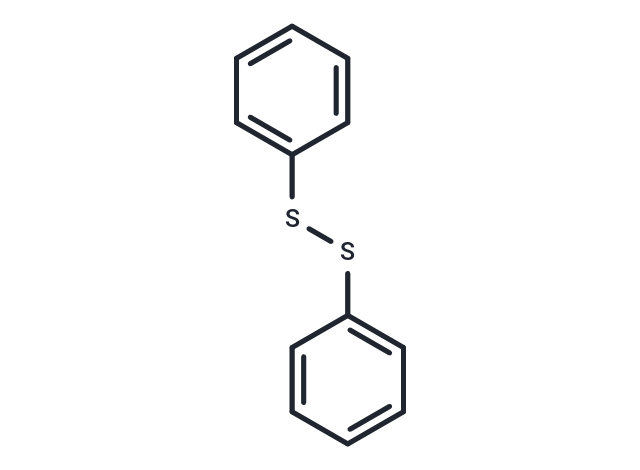
Diphenyl disulfide
CAS No. 882-33-7
Diphenyl disulfide( —— )
Catalog No. M34951 CAS No. 882-33-7
Diphenyl disulfide (Phenyl disulfide) shows anticancer activity in breast cancer cell lines.Diphenyl disulfide induces and enhances apoptosis in breast cancer cells through Bax protein hydrolysis activation and concomitant autophagy.
Purity : >98% (HPLC)
 COA
Datasheet
HNMR
HPLC
MSDS
Handing Instructions
COA
Datasheet
HNMR
HPLC
MSDS
Handing Instructions
| Size | Price / USD | Stock | Quantity |
| 100MG | Get Quote | In Stock |


|
| 200MG | Get Quote | In Stock |
|
| 500MG | Get Quote | In Stock |
|
| 1G | 27 | In Stock |
|
Biological Information
-
Product NameDiphenyl disulfide
-
NoteResearch use only, not for human use.
-
Brief DescriptionDiphenyl disulfide (Phenyl disulfide) shows anticancer activity in breast cancer cell lines.Diphenyl disulfide induces and enhances apoptosis in breast cancer cells through Bax protein hydrolysis activation and concomitant autophagy.
-
DescriptionDiphenyl disulfide is an endogenous metabolite.
-
In Vitro——
-
In Vivo——
-
Synonyms——
-
PathwayProteasome/Ubiquitin
-
TargetEndogenous Metabolite
-
RecptorEndogenous Metabolite | Apoptosis | BCL
-
Research Area——
-
Indication——
Chemical Information
-
CAS Number882-33-7
-
Formula Weight218.34
-
Molecular FormulaC12H10S2
-
Purity>98% (HPLC)
-
SolubilityIn Vitro:?DMSO : 100 mg/mL (458.00 mM; Ultrasonic )
-
SMILESS(SC1=CC=CC=C1)C1=CC=CC=C1
-
Chemical Name——
Shipping & Storage Information
-
Storage(-20℃)
-
ShippingWith Ice Pack
-
Stability≥ 2 years
Reference
molnova catalog



related products
-
N6-Isopentenyladenos...
N6-Isopentenyladenosine, an end product of the mevalonate pathway, is an autophagy inhibitor with anti-melanoma activity. N6-Isopentenyladenosine, an RNA modification found in cytokinins, regulates plant growth/differentiation and improves the efficiency
-
Methionine sulfoxide
Methionine sulfoxide can be regarded as a biomarker of oxidative stress in vivo.?Methionine sulfoxide is an oxidation product of methionine with reactive oxygen species.?
-
m-Coumaric acid
m-Coumaric acid is a polyphenol metabolite from caffeic acid, formed by the gut microflora and the amount in human biofluids is diet-dependant.?
