


 Cart
Cart
 sales@molnova.com



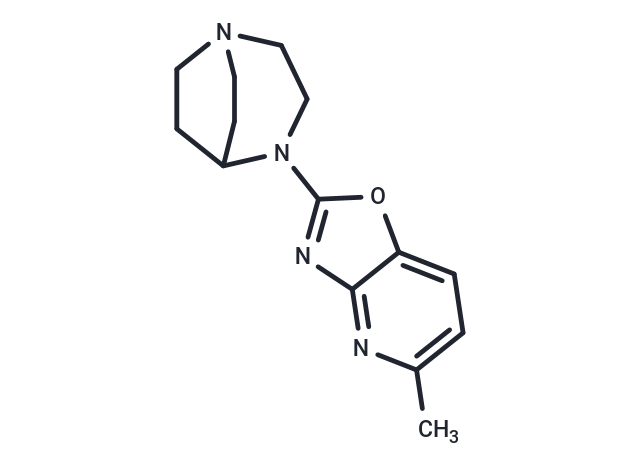
CP-810123
CAS No. 439608-12-5
CP-810123( —— )
Catalog No. M34557 CAS No. 439608-12-5
CP-810123 is a new alpha 7 nAChR agonist for the treatment of cognitive impairment associated with psychiatric or neurological disorders such as schizophrenia and Alzheimer's disease.
Purity : >98% (HPLC)
 COA
Datasheet
HNMR
HPLC
MSDS
Handing Instructions
COA
Datasheet
HNMR
HPLC
MSDS
Handing Instructions
| Size | Price / USD | Stock | Quantity |
| 5MG | 686 | In Stock |


|
| 10MG | 938 | In Stock |
|
| 25MG | 1444 | In Stock |
|
| 50MG | 1841 | In Stock |
|
| 100MG | Get Quote | In Stock |
|
| 200MG | Get Quote | In Stock |
|
| 500MG | Get Quote | In Stock |
|
| 1G | Get Quote | In Stock |
|
Biological Information
-
Product NameCP-810123
-
NoteResearch use only, not for human use.
-
Brief DescriptionCP-810123 is a new alpha 7 nAChR agonist for the treatment of cognitive impairment associated with psychiatric or neurological disorders such as schizophrenia and Alzheimer's disease.
-
DescriptionCP-810123 is a new alpha 7 nAChR agonist for the treatment of cognitive impairment associated with psychiatric or neurological disorders such as schizophrenia and Alzheimer's disease.
-
In Vitro——
-
In Vivo——
-
Synonyms——
-
PathwayCell Cycle/DNA Damage
-
TargetAChR
-
RecptorAChR
-
Research Area——
-
Indication——
Chemical Information
-
CAS Number439608-12-5
-
Formula Weight258.32
-
Molecular FormulaC14H18N4O
-
Purity>98% (HPLC)
-
Solubility——
-
SMILESN=1C=2N=C(C=CC2OC1N3CCN4CCC3CC4)C
-
Chemical Name——
Shipping & Storage Information
-
Storage(-20℃)
-
ShippingWith Ice Pack
-
Stability≥ 2 years
Reference
molnova catalog



related products
-
PNU-282987 free base
PNU-282987 (free base) is a potent agonist of α7 nicotinic acetylcholine receptor (nAChR) with an EC50 of 154 nM and a functional antagonist of the 5-HT3 receptor with an IC50 of 4541 nM.
-
(S)-(+)-Dimethindene...
(S)-(+)-Dimethindene maleate is an orally available, selective muscarinic M2 receptor and histamine H1 receptor antagonist that also inhibits muscarinic M1, M3, and M4 receptors.
-
Ticarcillin sodium
Ticarcillin is a semisynthetic antibiotic with a broad spectrum of bactericidal activity against many gram-positive and gram-negative aerobic and anaerobic bacteria.
