


 Cart
 sales@molnova.com




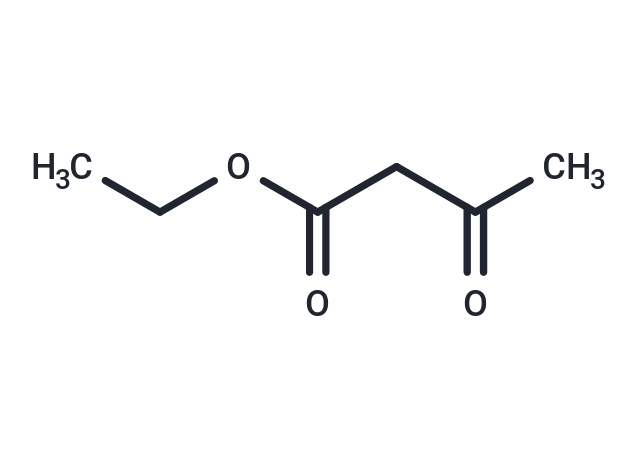
Ethyl acetoacetate
CAS No. 141-97-9
Ethyl acetoacetate( —— )
Catalog No. M33355 CAS No. 141-97-9
Ethyl acetoacetate (Ethyl acetylacetate), an ester, is a bacterial biofilm inhibitor and an intermediate utilized in the synthesis of various compounds.
Purity : >98% (HPLC)
 COA
Datasheet
HNMR
HPLC
MSDS
Handing Instructions
| Size | Price / USD | Stock | Quantity |
| 100MG | Get Quote | In Stock |


|
| 200MG | Get Quote | In Stock |
|
| 500MG | 27 | In Stock |
|
| 1G | Get Quote | In Stock |
|
Biological Information
-
Product NameEthyl acetoacetate
-
NoteResearch use only, not for human use.
-
Brief DescriptionEthyl acetoacetate (Ethyl acetylacetate), an ester, is a bacterial biofilm inhibitor and an intermediate utilized in the synthesis of various compounds.
-
DescriptionEthyl acetoacetate (Ethyl acetylacetate) is an ester widely used as an intermediate in the synthesis of many varieties of compounds. Ethyl acetoacetate is an inhibitor of bacterial biofilm.
-
In Vitro——
-
In Vivo——
-
Synonyms——
-
PathwayGPCR/G Protein
-
TargetAntibacterial
-
RecptorAntibacterial
-
Research Area——
-
Indication——
Chemical Information
-
CAS Number141-97-9
-
Formula Weight130.14
-
Molecular FormulaC6H10O3
-
Purity>98% (HPLC)
-
SolubilityIn Vitro:?H2O : 100 mg/mL (768.40 mM; Ultrasonic) DMSO : 100 mg/mL (768.40 mM; Ultrasonic )
-
SMILESCCOC(=O)CC(C)=O
-
Chemical Name——
Shipping & Storage Information
-
Storage(-20℃)
-
ShippingWith Ice Pack
-
Stability≥ 2 years
Reference
1. Rao M.Uppu, et al. Enantioselective catalytic asymmetric hydrogenation of ethyl acetoacetate in room temperature ionic liquids. Biochemical and Biophysical Research Communications. 1996 Dec; 229(3):764-769.
molnova catalog



related products
-
Phenazine-1-carboxyl...
Phenazine-1-carboxylic acid shows strong antifungal activity against all phytopathogenic fungi, inhibiting the fungal growth by about 90-100%. Phenazine-1-carboxylic acid could be used to compete with other phytopathogenic fungi that attack grapevine
-
Quinupristin
Quinupristin is a streptogramin antibiotic. Quinupristin blocks peptide bond synthesis to prevent the extension of polypeptide chains and promote the detachment of incomplete protein chains in the bacterial ribosomal subunits [2].
-
PA-824
A anti-tuberculosis agent that inhibits the synthesis of protein and cell wall lipid; exhibits bactericidal activity against both replicating and static M. tuberculosis (MIC: 0.015-0.25 ug/mL).
