


 Cart
Cart
 sales@molnova.com



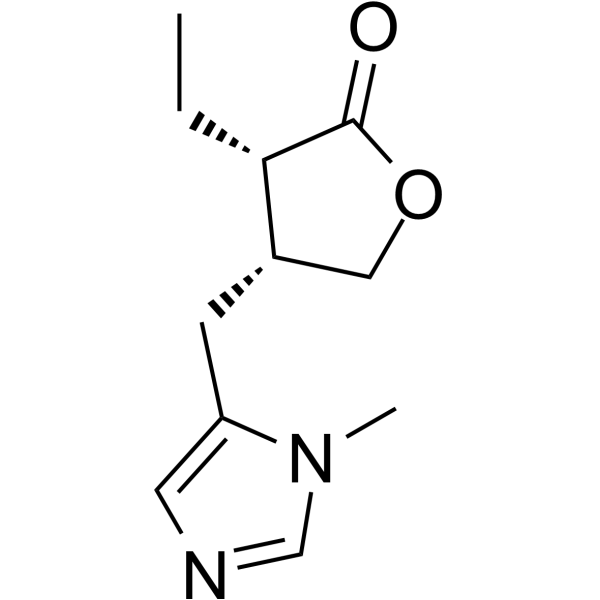
Pilocarpine
CAS No. 92-13-7
Pilocarpine( —— )
Catalog No. M32139 CAS No. 92-13-7
Pilocarpine has been used to treat glaucoma, ocular hypertension and xerostomia. Pilocarpine can induce seizures.
Purity : >98% (HPLC)
 COA
Datasheet
HNMR
HPLC
MSDS
Handing Instructions
COA
Datasheet
HNMR
HPLC
MSDS
Handing Instructions
| Size | Price / USD | Stock | Quantity |
| 50MG | Get Quote | In Stock |


|
| 100MG | Get Quote | In Stock |
|
| 200MG | Get Quote | In Stock |
|
| 500MG | Get Quote | In Stock |
|
| 1G | Get Quote | In Stock |
|
Biological Information
-
Product NamePilocarpine
-
NoteResearch use only, not for human use.
-
Brief DescriptionPilocarpine has been used to treat glaucoma, ocular hypertension and xerostomia. Pilocarpine can induce seizures.
-
DescriptionPilocarpine has been used to treat glaucoma, ocular hypertension and xerostomia. Pilocarpine can induce seizures. It antagonizes prostaglandin F2 alpha-induced ocular hypotension in monkeys. the ability of oral pilocarpine to normalise and reverse the salivary biochemical and immunological alterations induced by cGVHD parallels its known stimulatory effect on salivary flow rates. The combination of pilocarpine and sorbitol has effective antimicrobial activity.
-
In VitroTo evaluate the cytotoxicity of Pilocarpine, the morphology and viability of human corneal stromal (HCS) cells are examined by light microscopy and MTT assay, respectively. Morphological observations show that HCS cells exposed to Pilocarpine at a concentration from 0.625 to 20 g/L exhibit dose- and time-dependent proliferation retardation and morphological abnormality such as cellular shrinkage, cytoplasmic vacuolation, detachment from culture matrix, and eventually death, while no obvious difference is observed between those exposed to Pilocarpine below the concentration of 0.625 g/L and controls. Results of MTT assay reveal that the cell viability of HCS cells decrease with time and concentration after exposing to Pilocarpine above the concentration of 0.625 g/L (P<0.01 or 0.05), while that of HCS cells treated with Pilocarpine below the concentration of 0.625 g/L show no significant difference to controls. The partial muscarinic agonist, Pilocarpine, evokes concentration-dependent relaxation with an EC50 of 2.4 mM in isolated segments of rat tail artery that were constricted with Penylephrine (10 to 200 nM).
-
In VivoThe Pilocarpine-induced saliva secretion of the control rats (CN) and exercised (EX) rats is examined. A significantly greater amount of saliva is induced by Pilocarpine in the EX rats than in the CN rats (P<0.01). Conversely, the Na+ concentration in the saliva of the EX rats is significantly lower than that of the CN rats (P<0.05).
-
Synonyms——
-
PathwayOthers
-
TargetOther Targets
-
RecptorAntifection | EGF
-
Research Area——
-
Indication——
Chemical Information
-
CAS Number92-13-7
-
Formula Weight208.3
-
Molecular FormulaC11H16N2O2
-
Purity>98% (HPLC)
-
SolubilityDMSO, Pyridine, Methanol, Ethanol, etc.
-
SMILES——
-
Chemical Name——
Shipping & Storage Information
-
Storage(-20℃)
-
ShippingWith Ice Pack
-
Stability≥ 2 years
Reference
1.Archives of Oral Biology, 2001, 46(8):689-695.
molnova catalog



related products
-
Shionone
Shionone has anti-tussive and anti-inflammatory effects.
-
2H-1-Benzopyran-2-on...
2H-1-Benzopyran-2-one, 5,6,7-trihydroxy-
-
Perhexiline
Perhexiline is a prophylactic antianginal agent that inhibits carnitine palmitoyltransferase (CPT1/CPT2).
