


 Cart
Cart
 sales@molnova.com



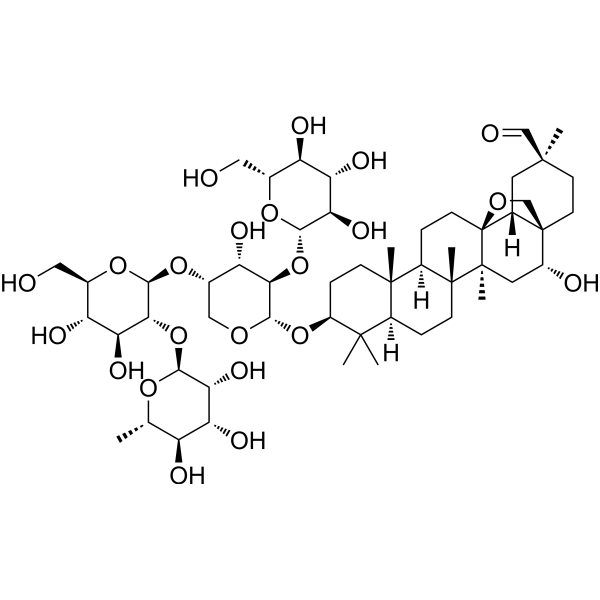
Ardisiacrispin B
CAS No. 112766-96-8
Ardisiacrispin B( —— )
Catalog No. M31904 CAS No. 112766-96-8
Ardisiacrispin B displays cytotoxic effects in multi-factorial drug resistant cancer cells via ferroptotic and apoptotic cell death.
Purity : >98% (HPLC)
 COA
Datasheet
HNMR
HPLC
MSDS
Handing Instructions
COA
Datasheet
HNMR
HPLC
MSDS
Handing Instructions
| Size | Price / USD | Stock | Quantity |
| 5MG | 235 | In Stock |


|
| 10MG | 351 | In Stock |
|
| 25MG | 588 | In Stock |
|
| 50MG | 821 | In Stock |
|
| 100MG | Get Quote | In Stock |
|
| 200MG | Get Quote | In Stock |
|
| 500MG | Get Quote | In Stock |
|
| 1G | Get Quote | In Stock |
|
Biological Information
-
Product NameArdisiacrispin B
-
NoteResearch use only, not for human use.
-
Brief DescriptionArdisiacrispin B displays cytotoxic effects in multi-factorial drug resistant cancer cells via ferroptotic and apoptotic cell death.
-
DescriptionArdisiacrispin B displays cytotoxic effects in multi-factorial drug resistant cancer cells via ferroptotic and apoptotic cell death.
-
In Vitro——
-
In Vivo——
-
Synonyms——
-
PathwayOthers
-
TargetOther Targets
-
Recptor——
-
Research Area——
-
Indication——
Chemical Information
-
CAS Number112766-96-8
-
Formula Weight1075.3
-
Molecular FormulaC53H86O22
-
Purity>98% (HPLC)
-
Solubility——
-
SMILES——
-
Chemical Name——
Shipping & Storage Information
-
Storage(-20℃)
-
ShippingWith Ice Pack
-
Stability≥ 2 years
Reference
molnova catalog



related products
-
Chetomin
Chetomin is an inhibitor of HIF-1 by weaken transcription of HIF-1, disrupting the binding of HIF-1α and HIF-2α to p300 at low nanomolar concentrations.
-
Droprenilamine
Droprenilamine (Valcor) is an alicyclic derivative of pentenylamine with antianginal properties.
-
Isoedultin
Isoedultin is a natural product for research related to life sciences.
