


 Cart
Cart
 sales@molnova.com



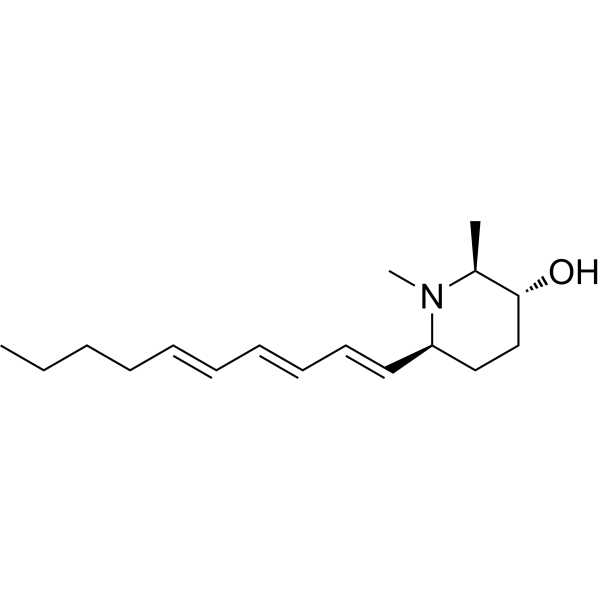
Microgrewiapine A
CAS No. 1420777-30-5
Microgrewiapine A( —— )
Catalog No. M31851 CAS No. 1420777-30-5
Microgrewiapine A is a selective cytotoxic agent for colon cancer cells over normal colon cells and to exhibit nicotinic receptor antagonistic activity for both the hα3β4 and hα4β2 receptor subtypes.
Purity : >98% (HPLC)
 COA
Datasheet
HNMR
HPLC
MSDS
Handing Instructions
COA
Datasheet
HNMR
HPLC
MSDS
Handing Instructions
| Size | Price / USD | Stock | Quantity |
| 5MG | 603 | In Stock |


|
| 50MG | Get Quote | In Stock |
|
| 100MG | Get Quote | In Stock |
|
| 200MG | Get Quote | In Stock |
|
| 500MG | Get Quote | In Stock |
|
| 1G | Get Quote | In Stock |
|
Biological Information
-
Product NameMicrogrewiapine A
-
NoteResearch use only, not for human use.
-
Brief DescriptionMicrogrewiapine A is a selective cytotoxic agent for colon cancer cells over normal colon cells and to exhibit nicotinic receptor antagonistic activity for both the hα3β4 and hα4β2 receptor subtypes.
-
DescriptionMicrogrewiapine A is a selective cytotoxic agent for colon cancer cells over normal colon cells and to exhibit nicotinic receptor antagonistic activity for both the hα3β4 and hα4β2 receptor subtypes.
-
In Vitro——
-
In Vivo——
-
Synonyms——
-
PathwayOthers
-
TargetOther Targets
-
Recptor——
-
Research Area——
-
Indication——
Chemical Information
-
CAS Number1420777-30-5
-
Formula Weight263.4
-
Molecular FormulaC17H29NO
-
Purity>98% (HPLC)
-
Solubility——
-
SMILES——
-
Chemical Name——
Shipping & Storage Information
-
Storage(-20℃)
-
ShippingWith Ice Pack
-
Stability≥ 2 years
Reference
molnova catalog



related products
-
5,7,8-Trimethoxycoum...
5,7,8-Trimethoxycoumarin is a natural product of Viola, Violaceae. 5,7,8-Trimethoxycoumarin can be used as a reference standard.
-
3-Chloro-L-Tyrosine
3-Chlorotyrosine a specific marker of myeloperoxidase-catalyzed oxidation is markedly elevated in low-density lipoprotein isolated from human atherosclerotic intima. In particular myeloperoxidase halogenates tyrosine residues in plasma proteins and generates 3-chlorotyrosine (CY).
-
AL 1965
AL 1965 has anti-neuropathic effects.
