


 Cart
Cart
 sales@molnova.com



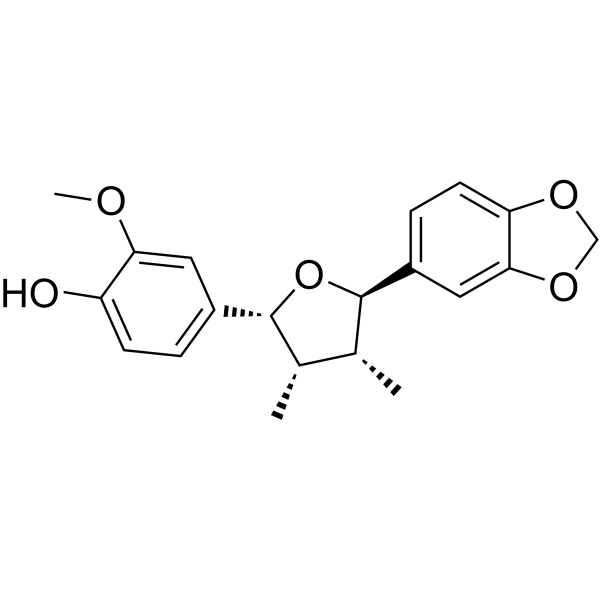
Chicanine
CAS No. 78919-28-5
Chicanine( —— )
Catalog No. M31613 CAS No. 78919-28-5
Chicanine has anti-inflammatory activity in macrophages by down-regulating LPS-induced inflammatory cytokines in IκBα±/MAPK/ERK signaling pathways.
Purity : >98% (HPLC)
 COA
Datasheet
HNMR
HPLC
MSDS
Handing Instructions
COA
Datasheet
HNMR
HPLC
MSDS
Handing Instructions
| Size | Price / USD | Stock | Quantity |
| 5MG | 331 | In Stock |


|
| 10MG | 495 | In Stock |
|
| 50MG | Get Quote | In Stock |
|
| 100MG | Get Quote | In Stock |
|
| 200MG | Get Quote | In Stock |
|
| 500MG | Get Quote | In Stock |
|
| 1G | Get Quote | In Stock |
|
Biological Information
-
Product NameChicanine
-
NoteResearch use only, not for human use.
-
Brief DescriptionChicanine has anti-inflammatory activity in macrophages by down-regulating LPS-induced inflammatory cytokines in IκBα±/MAPK/ERK signaling pathways.
-
DescriptionChicanine has anti-inflammatory activity in macrophages by down-regulating LPS-induced inflammatory cytokines in IκBα±/MAPK/ERK signaling pathways.
-
In Vitro——
-
In Vivo——
-
Synonyms——
-
PathwayOthers
-
TargetOther Targets
-
Recptor——
-
Research Area——
-
Indication——
Chemical Information
-
CAS Number78919-28-5
-
Formula Weight342.39
-
Molecular FormulaC20H22O5
-
Purity>98% (HPLC)
-
Solubility——
-
SMILES——
-
Chemical Name——
Shipping & Storage Information
-
Storage(-20℃)
-
ShippingWith Ice Pack
-
Stability≥ 2 years
Reference
molnova catalog



related products
-
Ac-Adhesin (1025-104...
Acetyl-Adhesin (1025-1044) amide is a 20-peptide fragment of Streptococcus pyogenes cell surface adhesin that acts as an antimicrobial peptide to specifically inhibit the binding of adhesin to salivary receptors and prevent recolonization of Streptococcus pyogenes.
-
Pulchinenoside E2
Pulchinenoside E2 (Compound 8) is a triterpene saponin isolated from the roots of Pulsatilla chinensis. Pulchinenoside E2 shows cytotoxic to HL-60 cells with an IC50 value of 2.6 μg/mL.
-
O-Propargyl-Puromyci...
O-Propargyl-Puromycin (OP-puro) is a potent protein synthesis inhibitor, a puromycin acetylene analog.
