


 Cart
Cart
 sales@molnova.com



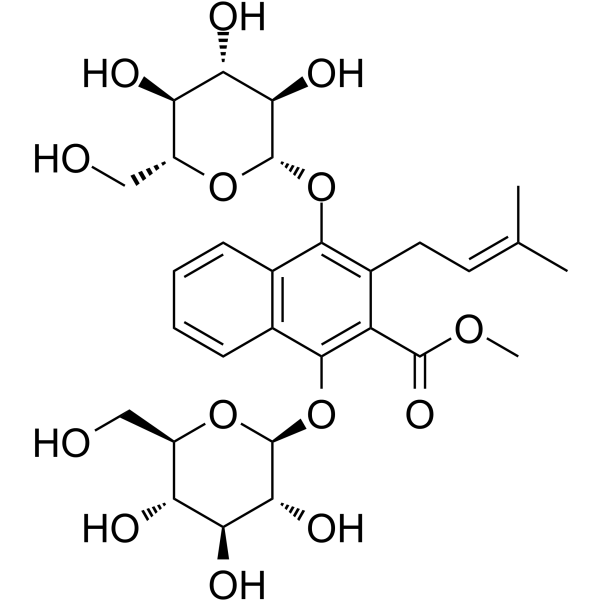
Methyl 1,4-bisglucosyloxy-3-prenyl-2-naphthoate
CAS No. 90685-26-0
Methyl 1,4-bisglucosyloxy-3-prenyl-2-naphthoate( —— )
Catalog No. M31577 CAS No. 90685-26-0
Methyl 1,4-bisglucosyloxy-3-prenyl-2-naphthoate is a natural product.
Purity : >98% (HPLC)
 COA
Datasheet
HNMR
HPLC
MSDS
Handing Instructions
COA
Datasheet
HNMR
HPLC
MSDS
Handing Instructions
| Size | Price / USD | Stock | Quantity |
| 5MG | 144 | In Stock |


|
| 50MG | Get Quote | In Stock |
|
| 100MG | Get Quote | In Stock |
|
| 200MG | Get Quote | In Stock |
|
| 500MG | Get Quote | In Stock |
|
| 1G | Get Quote | In Stock |
|
Biological Information
-
Product NameMethyl 1,4-bisglucosyloxy-3-prenyl-2-naphthoate
-
NoteResearch use only, not for human use.
-
Brief DescriptionMethyl 1,4-bisglucosyloxy-3-prenyl-2-naphthoate is a natural product.
-
DescriptionMethyl 1,4-bisglucosyloxy-3-prenyl-2-naphthoate is a natural product.
-
In Vitro——
-
In Vivo——
-
Synonyms——
-
PathwayOthers
-
TargetOther Targets
-
Recptor——
-
Research Area——
-
Indication——
Chemical Information
-
CAS Number90685-26-0
-
Formula Weight610.6
-
Molecular FormulaC29H38O14
-
Purity>98% (HPLC)
-
Solubility——
-
SMILES——
-
Chemical Name——
Shipping & Storage Information
-
Storage(-20℃)
-
ShippingWith Ice Pack
-
Stability≥ 2 years
Reference
molnova catalog



related products
-
Melanocyte Protein P...
Melanocyte Protein PMEL 17 (130-138) (human)
-
Lucidin ω-ethyl ethe...
Lucidin ω-ethyl ether (compound 17) is an anthraquinone metabolite isolated from the root part of Prismatomeris filamentosa with some antibacterial activity against Gram-positive and Gram-negative bacteria.
-
Neuropeptide W-30 (r...
Neuropeptide W-30 (rat) is an important stress mediator in the central nervous system that modulates the hypothalamus-pituitary-adrenal (HPA) axis and sympathetic outflow. Neuropeptide W-30 (rat) is an endogenous ligand for the two structurally related orphan G-protein-coupled receptors (GPCRs) GPR7 and GPR8. NPW-30 activates and binds to both GPR7 and GPR8 at similar effective doses.
