


 Cart
Cart
 sales@molnova.com



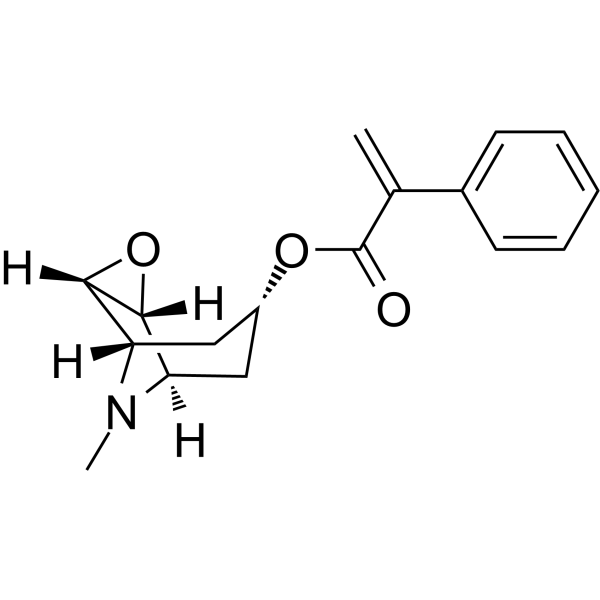
Apohyoscine
CAS No. 535-26-2
Apohyoscine( —— )
Catalog No. M31000 CAS No. 535-26-2
Apohyoscine is a natural product of Datura, Solanaceae. Apohyoscine can be used as a reference standard.
Purity : >98% (HPLC)
 COA
Datasheet
HNMR
HPLC
MSDS
Handing Instructions
COA
Datasheet
HNMR
HPLC
MSDS
Handing Instructions
| Size | Price / USD | Stock | Quantity |
| 5MG | 475 | In Stock |


|
| 50MG | Get Quote | In Stock |
|
| 100MG | Get Quote | In Stock |
|
| 200MG | Get Quote | In Stock |
|
| 500MG | Get Quote | In Stock |
|
| 1G | Get Quote | In Stock |
|
Biological Information
-
Product NameApohyoscine
-
NoteResearch use only, not for human use.
-
Brief DescriptionApohyoscine is a natural product of Datura, Solanaceae. Apohyoscine can be used as a reference standard.
-
DescriptionApohyoscine is a natural product of Datura, Solanaceae. Apohyoscine can be used as a reference standard.
-
In Vitro——
-
In Vivo——
-
Synonyms——
-
PathwayOthers
-
TargetOther Targets
-
Recptor——
-
Research Area——
-
Indication——
Chemical Information
-
CAS Number535-26-2
-
Formula Weight285.34
-
Molecular FormulaC17H19NO3
-
Purity>98% (HPLC)
-
SolubilityIn Vitro:?DMSO : 25 mg/mL (87.61 mM)
-
SMILES——
-
Chemical Name——
Shipping & Storage Information
-
Storage(-20℃)
-
ShippingWith Ice Pack
-
Stability≥ 2 years
Reference
molnova catalog



related products
-
2,3,4-Trifluoro-5-Ni...
2,3,4-Trifluoro-5-Nitro-Benzoic Acid is a chemical compound.
-
Pritumumab
Pritumumab (ACA 11) is a natural human IgG1 κ antibody that can be used to study glioblastoma and brain tumors.
-
Methyl 2-propylpenta...
Methyl 2-propylpentanoate (2-Propylvaleric acid methyl ester) has potential neuroprotective activity.
